


Idaho State of Sex Ed
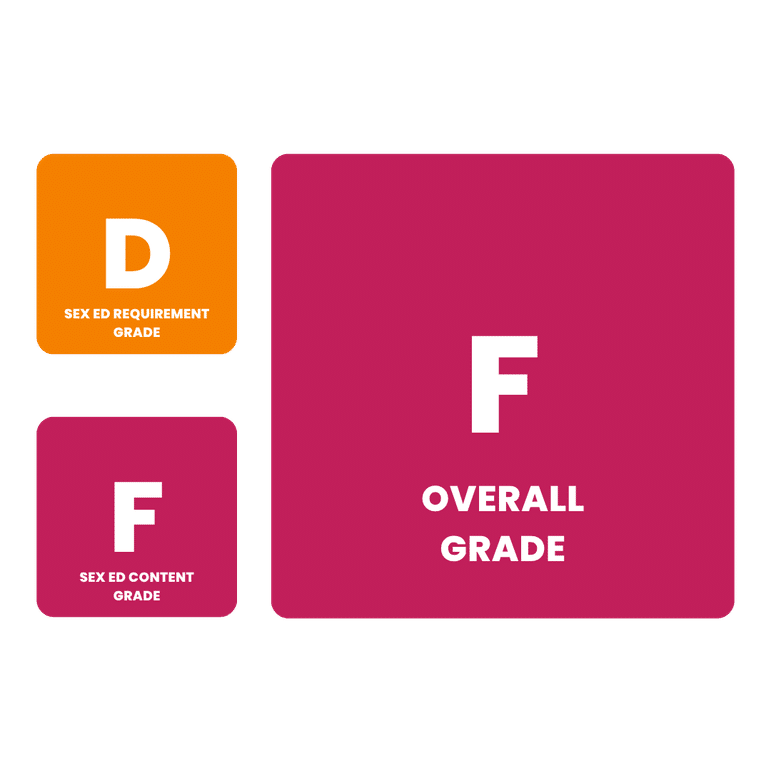
Current Requirement: Sex education is not required by law, nor is HIV/STI education in Idaho.
- If a school offers sex education, the curriculum must encourage abstinence.
- Idaho statute has no regulation on medically accurate sex education. However, the Idaho Department of Education’s health education standards state that if taught, growth, development, and family life instruction should be factual and medically accurate.
- Curriculum must include “ fetal development” instruction, including the viewing of the animation called “Meet Baby Olivia”.
- Curriculum is not required to include instruction on consent, and some instruction on healthy relationships is required.
- Idaho statute restricts instruction on sexual orientation or gender identity for students in K – 12 in a manner that is not in accordance with state standards or considered developmentally appropriate.
- Parents or guardians must give written permission for a student to participate in any form of sex education. This is referred to as an “opt-in” policy.
Recent Legislation Shaping the State Landscape
Over the last several years, Idaho has become increasingly hostile towards sex education and has taken several significant steps to restrict access to medically accurate and inclusive sex education.
No legislative activity specific to sex education was observed in 2026. In the 2025 legislative session, Governor Little signed House Bill 239 into law, which made several regressive changes to sex ed policy. Parental permission is now required before any human sexuality instruction (creating an opt-in policy). The bill also redefines “human sexuality”. It makes a distinction between the term and sex education, which means “sexual conduct, sexual pleasure, sexual intimacy, sexual abuse, sexual violence, eroticism, pornography, deviant sexual behavior, sexual attraction, sexual orientation, or any form of sexual identity, gender identity, gender ideology, or gender conversion.” This redefinition repeats dangerous rhetoric that stigmatizes sex education and severely limits the kind of sex education that can be taught. Senate Bill 1046 was also enacted in 2025 and now requires schools to include two videos in all sex education and human development courses in grades 5-12. First, a video showing fetal organ development in the womb and another showing all stages of human development from fertilization until birth, aligned with the larger trend of “Baby Olivia” bills. Finally, House Bill 352 was enacted and prohibits instruction on sexual orientation and gender identity in grades K – 12 in all public schools, ultimately restricting LGBTQIA+ students’ access to inclusive classroom instruction.
In the 2024 legislative session, House Bill 666 was enacted and prohibits abortion providers from furnishing instructional materials or instruction for sex education, another attack at the intersection of abortion access and sex education.
Advocates in Action
Advocates can take action by fighting back against recently passed anti-sex ed requirements to ensure young people in their community have access to quality education. Advocates can also contact their representatives to discuss the critical need to repeal restrictive policies and push for a statewide sex education mandate. Advocates are encouraged to use the Community Action Toolkit to strengthen local organizing efforts. For additional guidance, advocates can contact the SIECUS Policy team by emailing [email protected] or join the Sexuality Education Policy Action Council (SEPAC) using our interest form.
More on Sex Ed in Idaho…
State Law: A Closer Look
Sex education is not mandated in Idaho. Idaho Statute §33-1608 states that the “primary responsibility of family life and sex education” rests with a student’s home and church and that “the schools can only complement and supplement those standards which are established in the family.” Local school boards may decide to offer sex education. If a school board institutes sex education, the program must place “major emphasis” on the home (including “appreciation of the important place the family home holds in the social system of our culture”), family, and church as important areas for learning such knowledge. School boards must include parents and community groups in all aspects of instituting and evaluating sex education programs.
In addition, the statute states that programs should give young people “the scientific, physiological information for understanding sex and its relation to the miracle of life.” They must also include “knowledge of the power of the sex drive and the necessity of controlling that drive by self-discipline.”
House Bill 239, passed on March 31, 2025, amends Idaho Code Section 33-1609 to redefine the terms “human sexuality” and “sex education” as two distinct concepts. Human sexuality is defined as “sexual conduct, sexual pleasure, sexual intimacy, sexual abuse, sexual violence, eroticism, pornography, deviant sexual behavior, sexual attraction, sexual orientation, or any form of sexual identity, gender identity, gender ideology, or gender conversion.” “Sex education” is defined as “the study of the anatomy and the physiology of human reproduction.” In 2023, Idaho enacted House Bill 228 into law, which also amended Section 33-1609 to change the definition of abstinence to the following:
“‘Abstinence” means the absence of any sexual activity before marriage, which activity includes physical contact between individuals involving intimate or private areas of the body that can potentially:
(a) Result in pregnancy;
(b) Transmit sexually transmitted diseases and infections; or
(c) Present emotional risks.”
House Bill 239 also states that, “prior to any child attending instruction that addresses human sexuality as it is specifically and narrowly defined in section 33-1609, 29 Idaho Code…the school district offering such instruction shall notify parents and legal guardians of children who are eligible to attend such instruction no less than two (2) weeks before the date that such instruction will begin.” Schools must provide a description of curriculum, and allow parents to review materials if requested. Students are not able to attend instruction unless their guardian “submits a signed and written permission form to the board of trustees within one (1) week of the commencement of the instruction granting the school district permission to allow the child to attend the instruction.” This statute enshrines an opt-in policy in Idaho, which has been shown to prevent students from receiving sex education.
Several recent laws drastically shape sex education content for students in Idaho. House Bill 352, enshrined into law on March 31, 2025, requires public schools to adopt policies that “prohibit classroom instruction by public school personnel on sexual orientation or gender identity from kindergarten through grade 12 or in a manner that is not age-appropriate or developmentally appropriate for students in accordance with state standards.”
Due to Senate Bill 1046, beginning in the 2025-2026 school year, each school must provide instruction on human growth and development for students in grades 5 through 12, which must include:
“(a) A high-definition ultrasound video, at least three (3) minutes in duration, showing the development of the brain, heart, sex organs, and other vital organs in early fetal development; and
(b) A high-quality, computer-generated rendering or animation showing the process of fertilization and every stage of human development inside the uterus, noting significant markers in cell growth and organ development for every week of pregnancy until birth.”
The above “human growth and development” instruction must also be included in every class that discusses human biology, contraception, sexually transmitted diseases or sexually transmitted infections (STDs or STIs).
(2) “Sex education” means the study of the anatomy and the physiology of human reproduction.
State Standards
For schools offering sex education, the Idaho Department of Education’s Idaho Content Standards for Health Education require content related to the “consequences of sexual activity” beginning in grades 6-8. By grade 12, this content should include “encouragement of abstinence from sexual activity, sexually transmitted infections (STIs) (e.g., transmission and prevention), and pregnancy prevention.” Instruction should also include discussions of emotional intelligence, stress management, mental illness, suicide prevention, healthy relationships, acceptance of self and others, communication skills, and conflict resolution. All information should be “factual, medically accurate, and objective.”
Youth Sexual Health Data
The CDC’s Youth Risk Behavior Survey (YRBS) tracks adolescent health behaviors, including sexual health behaviors. As of 2023, Idaho no longer participates in YRBS data collection. The CDC’s School Health Profiles measure school health policies, practices, and the sexual health topics taught in schools. Idaho’s results were not representative for the 2024 School Health Profiles Survey. Visit the CDC’s School Health Profiles for additional information on school health policies and practices.
The quality of sex education taught often reflects funding available for sex education programs. To learn more about federal funding streams, click here.