


Utah State of Sex Ed
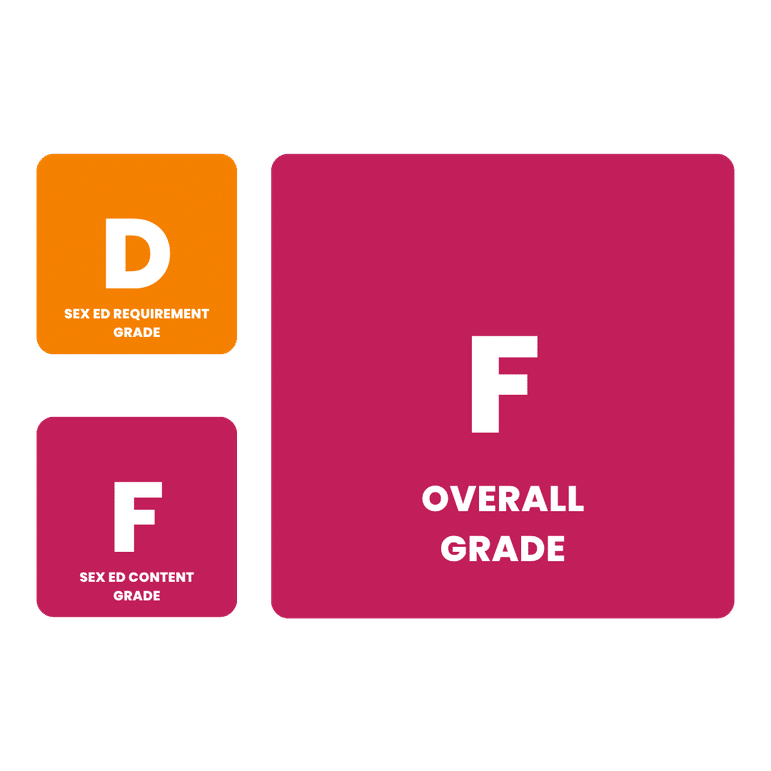
Current Requirement: Utah schools must teach health education, which includes some sex education concepts.
- Curriculum is required to include human development, communicable disease prevention, marriage and “safe dating practices”, and pregnancy prevention.
- Curriculum stresses abstinence, and schools are not required to provide instruction on contraception.
- Curriculum must be medically accurate.
- Curriculum is not required to include instruction on sexual orientation or gender identity.
- Curriculum is not required to include instruction on consent. However, the curriculum must include instruction on refusal skills.
- Parents or guardians must give written permission for a student to participate in any form of sex education. This is called an “opt-in” policy.
Recent Legislation Shaping the State Landscape
Advocates in Utah have continued to battle against attacks on already limited sex education requirements across the state over the past four years. In 2026, two unsuccessful sex education bills were introduced, House Bill 315 and House Bill 317, which would have required health education to include stigmatizing human growth and development in grades 3-12, including viewing an ultrasound video and animation (aka “Baby Olivia” legislation) and requiring instruction on social health in health education which is “the ability to build maintain and improve mutually beneficial relationships with friends family community…”, respectively. In the 2025 legislative session, Governor Cox signed two bills into law that have serious implications for sex education in Utah: House Bill 281 and House Bill 233. House Bill 281 adds required instruction on human development, marriage, safe dating practices, and sexual abuse prevention to health education. Still, it also doubled down on an abstinence-only approach by adding instruction on “success sequencing,” another rebrand of abstinence-only-until-marriage instruction. This instruction is not only stigmatizing, but it also ignores the real systemic barriers young people face in achieving economic prosperity. HB 281 also requires schools that do choose to teach about contraception to emphasize failure rates and conflate it with abortion. House Bill 233 further drops the quality of sex education by prohibiting abortion providers from teaching health education classes in Utah schools and prohibiting the use of any curricula developed by them. This severely restricts access to medically accurate and evidence-based sex education that trained experts in reproductive health teach. It also allows harmful entities like crisis pregnancy centers and/or conservative faith-based entities to come in and provide inaccurate and shame-based instruction on sexual health.
Advocates in Action
Advocates can take action by fighting back against recent restrictions on sex education to ensure young people in their community have access to quality sexual health information. After contacting their local school board, advocates can determine what topics are missing from health education, such as contraception, and who provides instruction. They can then voice the need to advance sex education requirements in their community.
Advocates can contact their representatives to discuss the need for a statewide sex education mandate that is not centered on abstinence and provides medically accurate instruction on contraception in Utah. Advocates are encouraged to use the Community Action Toolkit to strengthen local organizing efforts. For additional guidance, advocates can contact the SIECUS Policy team by emailing [email protected] or join the Sexuality Education Policy Action Council (SEPAC) using our interest form.
More on Sex Ed in Utah…
State Law: A Closer Look
Utah Code (§ 53G-10-402, Administrative Code §§ R277-474, and R277-700) mandates the State Board of Education to establish curriculum requirements for health education with the purpose of:
“(A)equipping students with practical safety skills regarding sexual abuse, trafficking, and harassment;
(B)promoting respect for humankind and individual responsibility;
(C)fostering character development and decision- making through the success sequence; and
(D)encouraging healthy personal and family relationships”
This instruction includes the following:
“(A)the success sequence;
(B)community and personal health, including personal hygiene and the prevention of communicable disease;
(C)physiology;
(D)human development;
(E)marriage and safe dating practices;
(F)refusal skills;
(G)resilience;
(H)situational awareness;
(I)the harmful effects of pornography; and
(J)the consequences of behaviors that pose a risk to individual health or of failure under the success sequence.”
This instruction must stress “the importance of abstinence from all sexual activity before marriage and fidelity after marriage as methods for (A) maintaining mental, physical, and social health, including reducing stress; B) eliminating risks associated with sexual activity, including preventing pregnancy and certain communicable diseases; and C) achieving the success sequence”
Among other limitations on what can be taught, the Utah Code states that “[a]t no time may instruction be provided, including responses to spontaneous questions raised by students, regarding any means or methods that facilitate or encourage the violation of any state or federal criminal law by a minor or an adult.”
Utah Code further requires that materials used for health instruction not include:
- the intricacies of intercourse, sexual stimulation, or erotic behavior;
- the advocacy of premarital or extramarital sexual activity; or
- the advocacy or encouragement of the use of contraceptive methods or devices.
Utah code allows for instruction on contraception, but that cannot include discussion on “abortion or any abortive methods” and must stress “effectiveness, failure rates for youth, limitations, risks, and information on state law applicable to minors obtaining contraceptive methods or devices.” Further, the state board cannot require instruction on contraception nor can instruction include a demonstration or depiction of how a contraceptive method is used.
Parents or guardians must give written permission for a student to participate in any form of sex education. This is called an “opt-in” policy. Further, schools may not provide any instruction on sex that is not included in the current definition of “sex education” under Utah Code Section 53G-10-403 as listed below –
“(A)sexual abstinence;
(B)human development, including puberty and maturation;
(C)human reproductive processes, including conception, fetal development, pregnancy, and birth;
(D) human reproductive anatomy; and physiology;
(E)healthy dating practices, marriage, and parenthood, in accordance with the success sequence as defined in Section 53G-10-402;
(F) adoption in accordance with Section 53G-10-404;
(G)information about contraceptive methods or devices in accordance with Subsections 53G-10-402(2)(b) and ©;
(H)chronic, infectious, and acute diseases and conditions of the reproductive system, including sexually transmitted infections and diseases; or
(I)refusal skills, as defined in Section 53G-10-402
State Standards
In the 2020-2021 school year, Utah implemented the Utah Core State Standards for Health Education in schools, which outline standards related to sex education. Examples related to sexual health include: “Standard HI.HD.6: Identify practices for prevention of common sexually transmitted diseases/infections (STD/STI).” “Standard HI.HD.8: Recognize characteristics of healthy and unhealthy relationships.”, “Standard HII.HD.2: Define and describe the mental, emotional, physical, and social health benefits of sexual abstinence.”, and more. Schools are not required to follow this framework. The State Board of Education further explains that “Utah statute requires local education agencies (LEAs) to adopt curriculum for sex education for their schools. Local board policies may include less than what the law allows but never more.”
Youth Sexual Health Data
The CDC’s Youth Risk Behavior Survey (YRBS) tracks adolescent health behaviors, including sexual health behaviors. To learn more about Utah’s 2023 YRBS results, click here. The CDC’s School Health Profiles measure school health policies, practices, and the sexual health topics taught in schools—Utah omitted sexual health topics from its 2024 School Health Profiles Survey. Visit the CDC’s School Health Profiles for additional information on school health policies and practices.
The quality of sex education taught often reflects funding available for sex education programs. To learn more about federal funding streams, click here.