


South Dakota State of Sex Ed
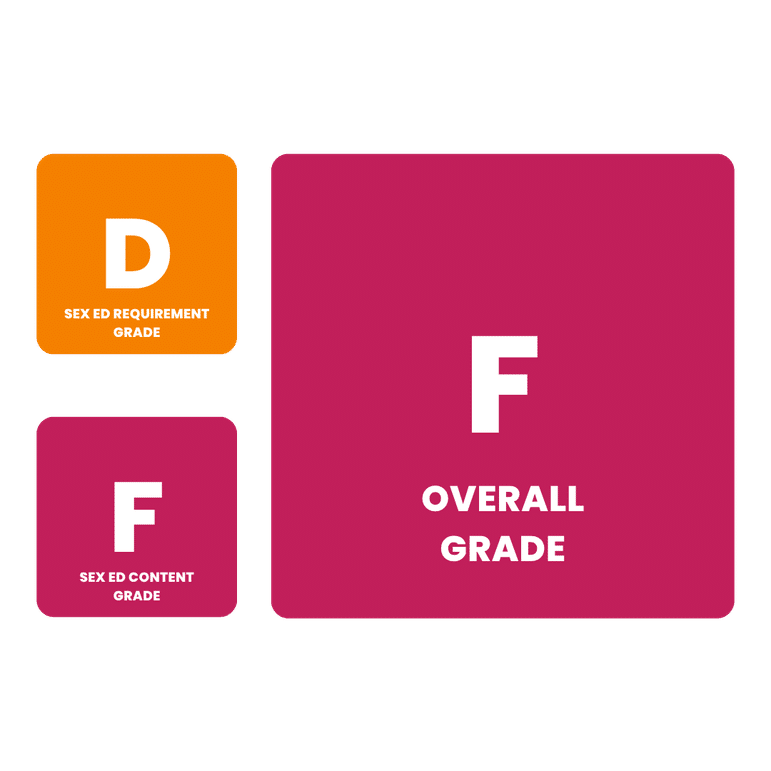
Current Requirement: Sex education is not required, nor is HIV/STI education in South Dakota schools.
- Instruction that stresses abstinence must be taught via “character development instruction”
- Curriculum is not required to include instruction on sexual orientation or gender identity.
- South Dakota has no regulation regarding medically accurate sex education.
- Curriculum is not required to include instruction on consent.
- After HB 1313 passed, South Dakota requires instruction on human growth and development, incorporating materials like fetal ultrasound videos.
- South Dakota’s standard regarding the ability of parents and guardians to remove their children from sex education instruction varies by school district.
Recent Legislation Shaping the State Landscape
Advocates have encountered challenges in advancing progressive sex education in South Dakota.
In 2026, House Bill 1313 was enacted, which requires misinformed and stigmatizing fetal development instruction, including videos of ultrasounds and animations. These bills represent an alarming and growing trend of attacks on both sex education and abortion by perpetuating anti-abortion misinformation and stigma. Two unsuccessful bills, House Bill 1171 and House Bill 1172, were also introduced in 2025 under the umbrella of “Baby Olivia”.
Beyond sex education, South Dakota schools continue to be the target for “parental rights” bills that would also impact access to inclusive materials in school libraries. In 2024, House Bill 1197 was signed into law and requires additional procedures for school libraries to prohibit minors’ access to “obscene” materials via computers, and requires schools to post this policy on their website and in the local newspaper. These materials may indirectly include sex education materials or LGBTQIA+ resources and represent the legislative landscape in South Dakota.
Advocates in Action
Advocates can take action to ensure young people in their community have access to quality sex education in South Dakota. After contacting their local school board, advocates can determine whether or not sex education is being taught. Advocates can also focus on ensuring that the curriculum is medically accurate, including opting out of showing the “Meet Baby Olivia” propaganda film for human growth and development instruction. They can then vocalize the importance of advancing sex education requirements in their community beyond focusing on abstinence.
Advocates can also contact their representatives to discuss the need to repeal the recently passed “Baby Olivia” bill and for a statewide sex education mandate. Advocates are encouraged to use the Community Action Toolkit to strengthen local organizing efforts. For additional guidance, advocates can contact the SIECUS Policy team by emailing [email protected] or join the Sexuality Education Policy Action Council (SEPAC) using our interest form.
More on Sex Ed in South Dakota…
State Law: A Closer Look
South Dakota law (§§ 13-33-1 and 13-33-6.1) does not specifically mention sex education; however, it requires public schools to substantially conform to the educational standards established by the state Board of Education. Furthermore, the law requires that “character development instruction” be provided in all schools unless the governing body elects to do otherwise. Character development instruction “impress[es] upon the minds of the students the importance of citizenship, patriotism, honesty, self-discipline, self-respect, sexual abstinence, respect for the contributions of minority and ethnic groups to the heritage of South Dakota, regard for the elderly, and respect for authority.”
With the passage of HB 1313, the following sections were added to state law:
13-3-98. Prenatal human development–Required instruction.
The South Dakota Board of Education Standards shall recommend resources for age-appropriate and research-based instruction in prenatal human growth and development. A school district shall use the resources recommended by the board in providing a health or science curriculum.
13-3-99. Prenatal human development–Required instruction–Contents.
The instruction in prenatal human growth and development required under § 13-3-98 must include:
(1) A high-definition ultrasound video that shows the presence of the brain, heart, and other major organs as they appear at various stages of prenatal development; and
(2) A high-quality, computer-generated rendering or animation, or a high-definition ultrasound video that shows the progress of prenatal human development from fertilization through birth, noting significant moments in the progress of cellular growth and organ development.
Any video or computer-generated rendering or animation shown, as required by this section, must be at least three minutes in length.
13-3-100. Prenatal human development–Required instruction–Prohibited materials.
The age-appropriate, research-based instruction in prenatal human growth and development required under § 13-3-98 may not include any book, article, outline, handout, video, or other material produced or provided by an entity that:
(1) Performs abortions;
(2) Promotes abortion;
(3) Contracts or subcontracts with an entity that performs abortions or promotes abortion;
(4) Becomes or continues to be affiliated with an entity that performs abortions or promotes abortions; or
(5) Regularly makes referrals to an entity that provides abortions or promotes abortion.
State Standards
In May 2026, South Dakota adopted revised Health Education Standards, which guide curriculum development but do not provide additional detail on character development instruction or address sexual health concepts. For accreditation, the state standards must be followed by law.
Youth Sexual Health Data
The CDC’s Youth Risk Behavior Survey (YRBS) tracks adolescent health behaviors, including sexual health behaviors. To learn more about South Dakota’s 2023 YRBS results, click here. The CDC’s School Health Profiles measure school health policies, practices, and the sexual health topics taught in schools. South Dakota did not participate in the 2024 School Health Profiles Survey. Visit the CDC’s School Health Profiles for additional information on school health policies and practices.
The quality of sex education taught often reflects funding available for sex education programs. To learn more about federal funding streams, click here.