

Ohio State of Sex Ed
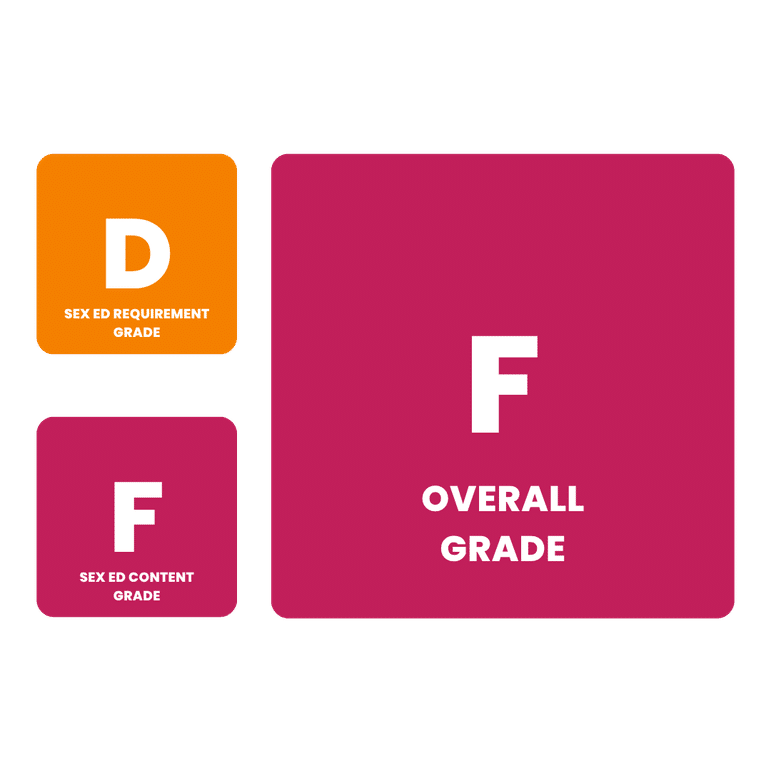
Current Requirement: Ohio requires schools to provide health education that covers sexually transmitted infection education, child sexual abuse and assault prevention education, and dating violence education.
- Curriculum must emphasize abstinence.
- Ohio has no regulations regarding medically accurate sex education.
- Curriculum is not required to include instruction on sexual orientation or gender identity.
- Curriculum is not required to include instruction on consent. Ohio does, however, require instruction on dating violence and sexual violence prevention, which mentions healthy relationships.
- Curriculum is required to stigmatize abortion.
- Upon written request of a parent or guardian, a student may be excused from receiving any or all sex education instruction. This is called an “opt-out” policy. Further, if the school provides any education beyond the mandated topics, it must obtain prior parental consent. This is called an “opt-in” policy.
Recent Legislation Shaping the State Landscape
Anti-sex education lawmakers in Ohio have been working to restrict sex education through bills that would require “success sequencing” to be taught in schools. In the current 2025-2026 legislative session, regressive lawmakers introduced Senate Bill 156, which would require “success sequencing” to be taught in Ohio schools; as of September 2026, it has passed one chamber and is still active. House Bill 96, an appropriations bill that passed, also included funding for a “success sequence” curriculum through instruction on social inclusion that the Department of Education must offer as a training program. In 2026, Senate Bill 276 (House Bill 269) was enacted and deceptively targets school psychologists while actually requiring the Department of Education and Workforce to maintain a list of approved Success Sequencing curricula and regularly review and update resources. More importantly, it requires school districts to provide instruction in grades 7 through 12. Although it does not require teaching it as part of STI prevention instruction, school districts may ultimately decide which subjects to include it in.
In addition to the “success sequence”, regressive lawmakers have also been working hard to introduce fetal development instructional requirements in schools, similar to other “Baby Olivia” laws across the country. Two bills (House Bill 485 and Senate Bill 310) are currently active, and advocates are actively defending against their advancement in the legislature.
Beyond sex education, the Ohio legislature continues to be the stage for legislative attacks in the form of so-called “parental rights”. House Bill 8, also known as the Parents Bill of Rights, was enacted in 2024 and requires schools to adopt policies including parental notification on health and well-being (potential “forced” outing clause) and any instructional materials with “sexuality content”, directly implicating sex education. This law also prohibits any “sexuality content” from being taught in grades kindergarten through third.
Advocates in Action
Advocates can take action to ensure young people in Ohio have access to quality sex education by vocalizing the importance of advancing sex education requirements in their community. Advocates can contact their representatives to discuss the need for a statewide comprehensive sex education mandate and the development of statewide health standards without legislative approval. Advocates are encouraged to use the Community Action Toolkit to strengthen local organizing efforts. For additional guidance, advocates can contact the SIECUS Policy team by emailing [email protected] or join the Sexuality Education Policy Action Council (SEPAC) using our interest form.
More on Sex Ed in Ohio…
State Law: A Closer Look
Ohio Revised Code Sections 3313.60 and 3313.6011 require health education that includes human immunodeficiency (HIV)/sexually transmitted infection (STI) instruction, stating that each school district’s board of education must establish a health education curriculum for “all schools under their control.” The health education curriculum must include “[v]enereal disease education,” which must emphasize that “abstinence from sexual activity is the only protection that is [100 percent] effective against unwanted pregnancy, sexually transmitted disease [STD], and the sexual transmission of a virus that causes acquired immunodeficiency syndrome [AIDS].” Additionally, it must:
- Stress that students should abstain from sexual activity until after marriage;
- Teach the potential physical, psychological, emotional, and social side effects of participating in sexual activity outside of marriage;
- Teach that conceiving children out of wedlock is likely to have harmful consequences for the child, the child’s parents, and society;
- Stress that STDs are serious possible hazards of sexual activity;
- Advise students of the laws about financial responsibility of parents to children born in- and out-of-wedlock; and
- Advise students of the circumstances under which it is criminal to have sexual contact with a person under the age of 16, pursuant to section 2907.04 of the Revised Code.
- Emphasize adoption as an option for unintended pregnancies.
Upon written request of a parent or guardian, a student may be excused from receiving any or all of this instruction. This is called an “opt-out” policy. However, under Section 3313.6011, any sex education instruction beyond what is specified above must require advance parental notification and consent before the student receives instruction. This is called an “opt-in” policy.
State Standards
Ohio law does not permit the State Board of Education to adopt the Health Education Standards for required implementation in Ohio schools. The Ohio Department of Education provides guidance on overall health education through a model curriculum, but schools are not required to follow it.
Youth Sexual Health Data
The CDC’s Youth Risk Behavior Survey (YRBS) tracks adolescent health behaviors, including sexual health behaviors. To learn more about Ohio’s 2023 YRBS results, click here. The CDC’s School Health Profiles measure school health policies, practices, and the sexual health topics taught in schools. To view Ohio’s results from the 2024 School Health Profiles Survey, visit CDC’s School Health Profiles Explorer tool. Visit the CDC’s School Health Profiles for additional information on school health policies and practices.
The quality of sex education taught often reflects funding available for sex education programs. To learn more about federal funding streams, click here.