


Montana State of Sex Ed
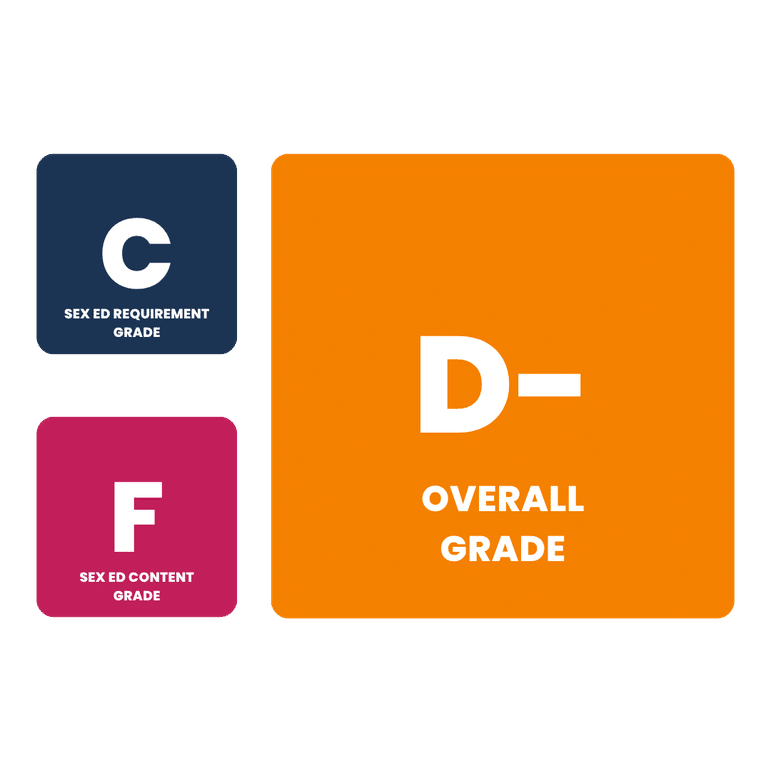
Current Requirement: Sex education is required through mandated state health content standards.
- Montana statute has no regulation regarding medical accuracy.
- Montana statute has no law regarding instruction on abstinence.
- Curriculum is not required to include instruction on sexual orientation or gender identity. Any instruction on sexual orientation and gender identity requires parental consent before student participation.
- Curriculum is not required to include instruction on consent.
- Schools must give written notice to a parent or guardian at least 48 hours before providing any human sexuality instruction and inform parents of their right to remove their children from such instruction. This is known as an “opt-out” requirement.
- School districts are required to make all curriculum used in the district’s or school’s human sexuality instruction available for public inspection before the use of the materials in actual instruction.
Recent Legislation Shaping the State Landscape
Montana does not convene in even years and therefore had no legislative developments in 2026.
Montana has seen a steady increase in legislation framed as expanding so-called ‘parental rights’, which in practice often limits access to sex education and supportive school environments. In 2025, House Bill 471 was introduced and would require parental consent before any instruction on sexual orientation and gender identity, called “identity instruction” in the bill text. Additionally, for instruction on human sexuality, additional notification procedures are required. This law creates a system in which students’ access to critical health information depends heavily on parental approval, increasing barriers to inclusive, evidence-based education.
Amid these other concerning trends, Montana also introduced two unsuccessful fetal ultrasound instruction bills, similar to the “Meet Baby Olivia” legislation we have seen across the country. Legislative Draft 2054 would have required health education to include high-definition ultrasound video and computer animations of fetal development and fertilization. Further, House Bill 753 would have required human sexuality instruction in schools to include imaging of a Dilation and Evacuation (D&E) abortion procedure at a certain gestational age. These bills do not aim to strengthen medically accurate instruction on human development; instead, they reflect a growing trend of introducing anti-abortion misinformation into sex education.
In contrast, Senate Bill 107 passed during the 2025 session offers a more constructive approach to addressing real threats to today’s young people. It expands health education to include instruction on preventing human trafficking and directs the Office of Public Instruction to undertake public education campaigns on child sex trafficking. While this represents progress, it stands alone against a broader backdrop of rollbacks that threaten Montana students’ well-being and educational equity.
Advocates in Action
Right now, advocates can take action to ensure young people in their community have access to quality sex education. By engaging with their local school board, advocates can determine what is currently being taught and identify gaps in instruction on topics such as consent, healthy relationships, sexual orientation and gender identity, and contraceptives. By attending public meetings, submitting comments, and building relationships with local education leaders, advocates can promote inclusive, evidence-based sex education that reflects all students’ needs.
Advocates can also contact their representatives to discuss the critical need for a statewide comprehensive sex education mandate. Advocates are encouraged to use the Community Action Toolkit to strengthen local organizing efforts. For additional guidance, advocates can contact the SIECUS Policy team by emailing [email protected] or join the Sexuality Education Policy Action Council (SEPAC) using our interest form.
More on Sex Ed in Montana]…
State Law: A Closer Look
Montana Code Annotated § 20-2-121 requires the board of public education to adopt content standards for school districts to follow in their curriculum development, and Administrative Rule 10.55.905 states that “health enhancement” is a required subject for graduation. Montana Administrative Rule §§ 10.53.101 requires schools to use the content standards for the health enhancement graduation requirement. Administrative Rules §§ 10.53.701-709 codify the health content standards into law. Montana Code Annotated § 20-7-120 requires schools to develop a policy ensuring parental or guardian notification at least 48 hours before holding an event or assembly or introducing materials for instructional use on human sexuality education, and to inform them of their right to opt their student out of instruction.
As a result of the passage of House Bill 471, Section 20-7-120, MCA was amended and now requires the following:
(b) A school may not allow a child to attend identity instruction unless the child’s parent or guardian
agrees in writing to allow the child to attend. Pursuant to 20-5-103, a child is excused from participating in identity instruction unless the child fails to attend after the parent or guardian has agreed in writing to allow the
child’s attendance. A school may allow a parent or guardian the opportunity to provide the agreement under this subsection (1)(b) at the beginning of a school year or semester as part of the annual notification under
subsection (3). Still, it shall allow a parent or guardian to cancel the agreement by providing written notification to the district superintendent at any time.
Defining “identity instruction” as:
(ii) “Identity instruction” means instruction that has the goal or purpose of studying, exploring, or
informing students about gender identity or gender expression, or sexual orientation.
This law effectively restricts access to any inclusive sex education content.
State Standards
As stated above, Montana Administrative Rule §§ 10.53.101 requires schools to use the content standards for the ‘health enhancement’ graduation requirement. However, the standards outlined in the Administrative Rules of Montana 10.53.701 are intentionally vague to allow local districts flexibility in determining curricular content. In other words, schools must provide a curriculum-based Health Enhancement program that meets the standards, but the curriculum content is up to the local district. This degree of ‘local control’ in content decisions means that determining what is being provided in health education, especially sex education topics, varies widely and makes understanding what each district is providing very complex.
Youth Sexual Health Data
The CDC’s Youth Risk Behavior Survey (YRBS) tracks adolescent health behaviors, including sexual health behaviors. To learn more about Montana’s 2023 YRBS results, click here. The CDC’s School Health Profiles measure school health policies, practices, and the sexual health topics taught in schools. To view Montana’s results from the 2024 School Health Profiles Survey, visit CDC’s School Health Profiles Explorer tool. Visit the CDC’s School Health Profiles for additional information on school health policies and practices.
The quality of sex education taught often reflects funding available for sex education programs. To learn more about federal funding streams, click here.