


Mississippi State of Sex Ed
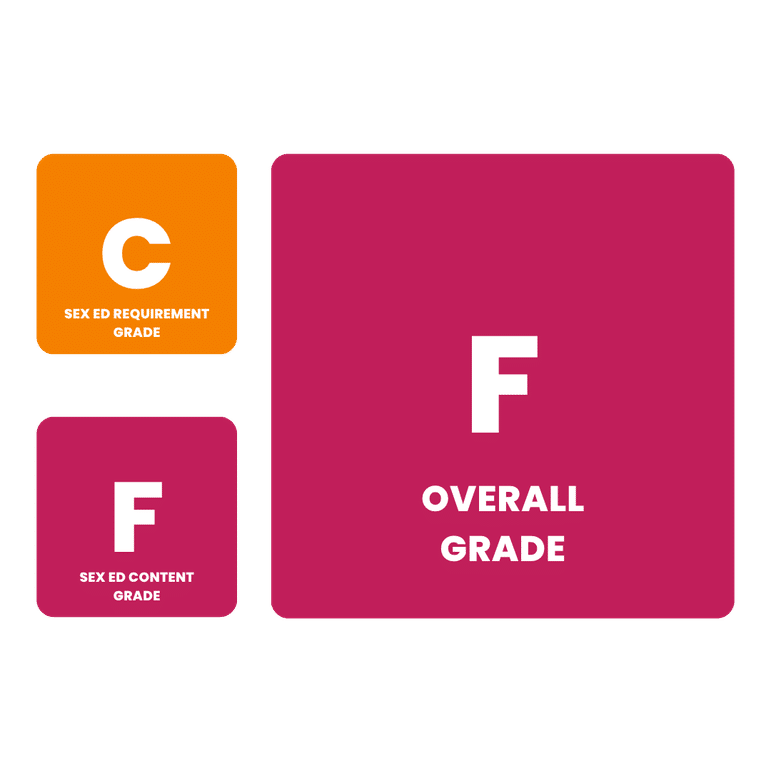
Current Requirement: Mississippi schools are required to provide sex education.
- Curriculum must stress abstinence through “abstinence-only” or “abstinence-plus” instruction.
- Mississippi has no regulation regarding medically accurate instruction.
- Curriculum must inform students of current state law related to homosexual activity.
- While Mississippi Code Annotated § 97-29-59 outlaws sodomy, the United States Supreme Court handed down a decision in Lawrence v. Texas that declared state laws criminalizing homosexual behavior to be unconstitutional in 2003.
- Curriculum is not required to include instruction on consent.
- No instruction on abortion is allowed to be taught.
- Schools must receive written permission from a parent or guardian before a student can participate in a sex education course. This is called an “opt-in” policy.
Recent Legislation Shaping the State Landscape
Sex education advocates have endured a prolonged struggle to advance quality sex education requirements in Mississippi. Representative Omeria Scott has largely spearheaded proactive efforts to pass progressive sex education policies, introducing legislation in 2022, 2023, 2024, 2025, and 2026 that would require schools to develop Comprehensive School Health Education programs in grades K-12, taught by the school nurse, aligned with the Mississippi Sex-Related Education policies, and emphasizing abstinence. All attempts to improve the state’s policies have failed. Additionally, attempts to require school districts to educate students on dating violence and healthy relationships, like HB 1443 (2026), HB 456 (2025), and HB 167 (2024), all died in committee.
During the 2026 session, lawmakers introduced legislation steeped in regressive ideologies by attempting to require unnecessary “fetal development” instruction through Senate Bill 2303, which explicitly mentions LiveAction’s “Meet Baby Olivia” video. Senate Bill 2512 was also introduced in an attempt to require instruction on the “success sequence” as well as other “character” education requirements. Like the “Teaching Honesty, Respect, Integrity, Virtue, and Excellence (T.H.R.I.V.E.) Act,” which was introduced through HB 1311 / SB 2302 and mirrors the success sequence with the addition of teaching “respect for legitimate authority and law” as well as respect for “patriotism,” “religious faith,” and other fundamentalist values. These bills failed to pass, but they reflect a growing national trend of the opposition to impose their beliefs on students while spreading misinformation and disinformation instead of teaching medically accurate, age-appropriate sex education.
Advocates in Action
Advocates can work to raise community awareness about specific topics, like contraception, abortion, and sexual orientation and gender identity, that are not allowed in sex education and seek out trusted community programming for youth. Additionally, advocates must remain vigilant and defend against continuous attacks on sex education that seek to require stigmatizing and inappropriate “fetal development” and “success sequencing” instruction. Advocates may also spread awareness in their communities about the need to update the Mississippi requirements to allow for an “opt-out” option as opposed to the current “opt-in” requirement, which presents an unnecessary barrier to receiving sex education.
Advocates can also contact state legislators to support a statewide comprehensive sex education mandate and use the Community Action Toolkit to strengthen local organizing efforts. For additional guidance, advocates can contact the SIECUS Policy team by emailing [email protected] or join the Sexuality Education Policy Action Council (SEPAC) using our interest form.
More on Sex Ed in Mississippi…
State Law: A Closer Look
Section 37-13-171 of the Mississippi Code of 1972 requires each school district to adopt either an “abstinence-only” or an “abstinence-plus” education policy. Under the law, both “abstinence-only” and “abstinence-plus” instruction must include “abstinence-only education.” Such instruction must teach:
- The social, psychological, and health gains to be realized by abstaining from sexual activity, and the likely negative psychological and physical effects of not abstaining.
- The harmful consequences to the child, the child’s parents, and society that bearing children out of wedlock is likely to produce, including the health, educational, financial, and other difficulties the child and their parents are likely to face, as well as the inappropriate social and economic burden placed on others.
- That unwanted sexual advances are irresponsible; how to reject sexual advances; and how alcohol and drug use increases vulnerability to sexual advances.
- That abstinence from sexual activity before marriage, and fidelity within marriage, is the only certain way to avoid out-of-wedlock pregnancy, sexually transmitted diseases (STDs), and related health problems.
- The current state law related to sexual conduct includes forcible rape, statutory rape, paternity establishment, child support, and homosexual activity.
- That a mutually faithful, monogamous marriage is the only appropriate setting for sexual intercourse.
Schools are not required to address every component of “abstinence-only” instruction. However, no instruction provided under an “abstinence-only” program can contradict any of these components. Instruction may also include a discussion of contraceptives, so long as it includes “a factual presentation of the risks and failure rates.” In addition to teaching abstinence-only concepts, “abstinence-plus” instruction may discuss broader sexual health topics, such as “the nature, causes and effects of [STDs],” and human immunodeficiency virus (HIV) and other STD prevention education. However, the program “shall not include instruction and demonstrations on the application and use of condoms.” The Mississippi Department of Education must approve each district’s curriculum, as well as establish a protocol for ensuring that provided instruction is “age, grade, and developmentally appropriate.” Students must be separated by gender at all times when sexuality instruction is taught. In addition, no instruction provided through an “abstinence-only” or “abstinence-plus” curriculum shall teach that “abortion can be used to prevent the birth of a baby.” Parents or guardians must receive notification at least one week before the provision of any human sexuality instruction, and they “have the right to request the inclusion of their child” in sex education instruction. This is called an “opt-in” policy.
State Standards
Mississippi’s Contemporary Health Curriculum (K–8) and (9–12) provide standards for health education programs in the state. The standards include “essential questions,” such as “How does abstinence from sexual activity show that you are responsible?” However, the standards also recommend discussing STDs and contraception alongside abstinence. Additionally, curricular standards are not mandatory, and local districts may choose their own curriculum as long as it is abstinence-only or abstinence plus.
Youth Sexual Health Data
The CDC’s Youth Risk Behavior Survey (YRBS) tracks six categories of health risk behaviors, including sexual health behaviors. To learn more about Mississippi’s 2023 YRBS results, click here. The CDC’s School Health Profile identifies 22 sexual health education topics as critical for ensuring a young person’s sexual health. Mississippi’s 2024 School Health Profiles response rate was not high enough to be representative and thus is excluded from the CDC’s School Health Profiles Explorer tool. Visit the CDC’s School Health Profiles for additional information on school health policies and practices.
The quality of sex education taught often reflects funding available for sex education programs. To learn more about federal funding streams, click here.