


Michigan State of Sex Ed
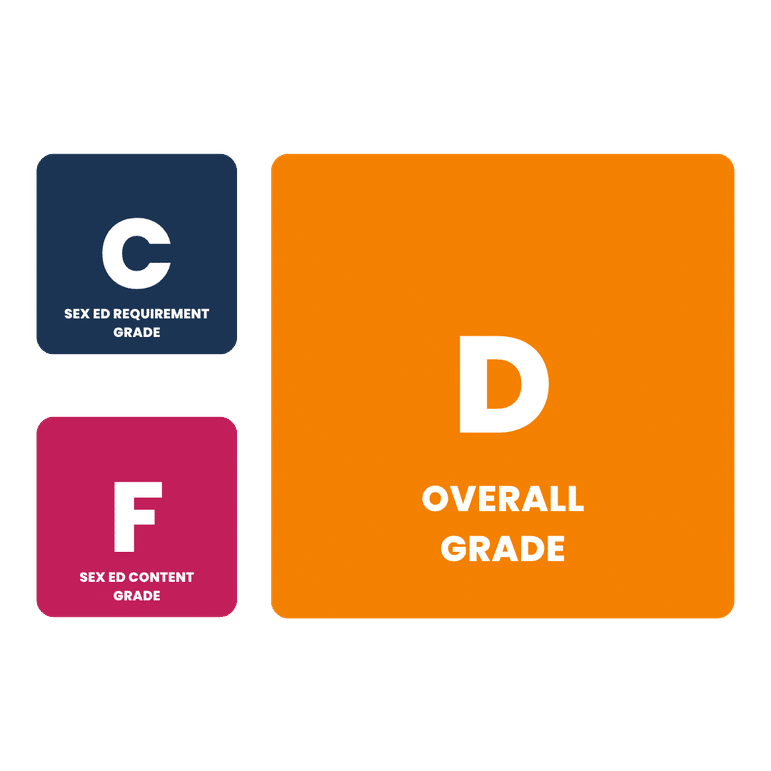
Current Requirement: Michigan schools must teach health education, including age-appropriate, medically accurate HIV/AIDS education and instruction on healthy dating and relationships, NOT sex education. Curriculum is not required to include instruction on consent. However, the curriculum must include instruction on refusal skills, that it is “wrong to take advantage of, harass, or exploit another person sexually”, and that having sex or sexual contact with an individual under the age of 16 is a crime.
- Curriculum must stress abstinence as a positive lifestyle.
- Michigan has no standard on medical accuracy for sex education.
- Parents or guardians must receive written notice of any sex education class and can remove their children from any part of the instruction. This is called an “opt-out” policy.
Recent Legislation Shaping the State Landscape
Michigan advocates have worked tirelessly to advance sex education and elevate young people’s voices, finding greater success in recent years through the state’s regulatory processes than through the legislature. In opposition to the Michigan Department of Education’s (MDE) 2025 health education standards update, regressive lawmakers have introduced bills attempting to undermine the State Board of Education’s authority to update guidelines. MDE began the standards revision process in September 2025 and, after public comment and revisions, the State Board of Education approved the updated guidelines in November. Attacks on this process began during the 2025 legislative session with the adoption of House Resolution 195, a nonbinding resolution opposing the updated health education standards. Followed by the 2026 introduction and failure of House Bill 5364, which sought to require House and Senate approval of revisions to Michigan’s state academic standards. Although the standards update is being conducted through the state’s existing education governance process and maintains local control over curriculum and existing parental opt-out requirements for sex education, some lawmakers want increased oversight.
These attempts to undo progress are combined with attempts to advance legislation steeped in regressive ideologies by attempting to require unnecessary “fetal development” instruction. During the 2025/26 session, through the introduction of House Bill 4826, lawmakers attempted to enshrine “a presentation of a high-quality, computer-generated rendering or animation, comparable to the Meet Baby Olivia video developed by Live Action” into health education guidelines. The “Meet Baby Olivia” video developed by Live Action is anti-abortion propaganda created by an extremist group known for their deceptive and manipulative tactics.
Advocates in Action
Noting that the biggest barrier to sex education for young people in Michigan is the lack of a statewide requirement to ensure all districts are teaching age-appropriate and medically accurate sex education, advocates should continue pushing for a mandate. At the local level, advocates can encourage their local school board to adopt sex education, join the Sex Education Advisory Board (SEAB), and/or select curriculum that aligns with updated health education standards.
Advocates can use the Community Action Toolkit to strengthen local organizing efforts. For additional guidance, advocates can contact the SIECUS Policy team by emailing [email protected] or join the Sexuality Education Policy Action Council (SEPAC) using our interest form.
More on Sex Ed in Michigan…
State Law: A Closer Look
Michigan law does not require schools to teach sex education. However, HIV/AIDS education is required. As outlined in Michigan Compiled Laws §§ 380.1169–.1170, 380.1506–.1507, and 388.1766–.1766a, schools may also offer sex education instruction, including information on family planning, family life education, and sexually transmitted disease (STD) prevention. HIV and sex education must present abstinence as “a responsible method of preventing unwanted or out-of-wedlock pregnancy and [STDs]” and as “a positive lifestyle for unmarried young people.” If offered, sex education classes must be elective, not a graduation requirement like health and physical education. To access an unabridged version of sex education laws in Michigan public schools, click here.
HIV/AIDS classes may be taught by health care professionals or teachers specifically trained in HIV/AIDS education, and teachers qualified to teach health education must provide sex education instruction. All instruction in reproductive health must be taught by qualified instructors and “supervised by a registered physician, a registered nurse, or other person certified by the state board as qualified.” In 2016, the 2016 School Aid Act went into effect and included a provision to financially penalize any public school district if employees assist students in accessing abortion care. This provision created another obstacle for teachers seeking to discuss abortion as a valid outcome of pregnancy. Affirming abortion as a valid outcome of pregnancy is a critical topic for inclusion within sex education programs. As a result, abortion “shall not be considered a method of family planning, nor shall abortion be taught as a method of reproductive health.” Further, no school official or school board member may dispense any family planning drug or device in school, nor may they make abortion referrals. In June 2024, the Michigan Department of Education released a memorandum to inform school districts about the passage of Senate Bill 66 (2023), which required the Department to develop a sexual harassment and sexual assault information guide. While this bill missed the opportunity to mandate consent and sexual assault education, it was a step in the right direction.
School boards must establish a Sex Education Advisory Board (SEAB) to review all educational materials and curricula. This advisory board must include parents, students, educators, clergy, and health professionals. Each school district must also appoint a state-approved sex education program supervisor. The local school board must approve all curricula and, if it makes any changes, hold at least two public hearings on the revisions. Parents must receive notification of any sex education class and be allowed to review its content, and they may remove their children from any part of the sex education instruction. This is called an “opt-out” policy.
State Standards
In November 2025, the Michigan State Board of Education approved updated Health Education Standards Guidelines, the state’s first update since 2007. Developed by the Michigan Department of Education, the guidelines include recommendations addressing sexual health, consent, healthy relationships, sexual orientation, gender identity, and gender expression. These guidelines are not mandated and do not require districts to provide sex education or cover every topic; rather, they guide local districts, which retain authority over health and sex education curricula. The 2025 updated standards clarify this in stating, “These standards are educational goals that define what students should know and be able to do by the end of each grade span. Standards typically do not provide all the details, particular skills, or the “how” of teaching, but are broad in scope and reach to ensure that they support all of Michigan’s 1.36 million students.” Additionally, the Michigan Board of Education adopted the Policy to Promote Health and Prevent Disease and Pregnancy, which states that sex education programs must be age-appropriate, developmentally and culturally appropriate, medically accurate, and based on effective programming.
Youth Sexual Health Data
The CDC’s Youth Risk Behavior Survey (YRBS) tracks six categories of health risk behaviors, including sexual health behaviors. To learn more about Michigan’s 2023 YRBS results, click here. The CDC’s School Health Profiles identify 22 sexual health education topics as critical for ensuring a young person’s sexual health. To view Michigan’s results from the 2024 School Health Profiles Survey, visit CDC’s School Health Profiles Explorer tool. Visit the CDC’s School Health Profiles for additional information on school health policies and practices.
The quality of sex education taught often reflects funding available for sex education programs. To learn more about federal funding streams, click here.