


Maine State of Sex Ed
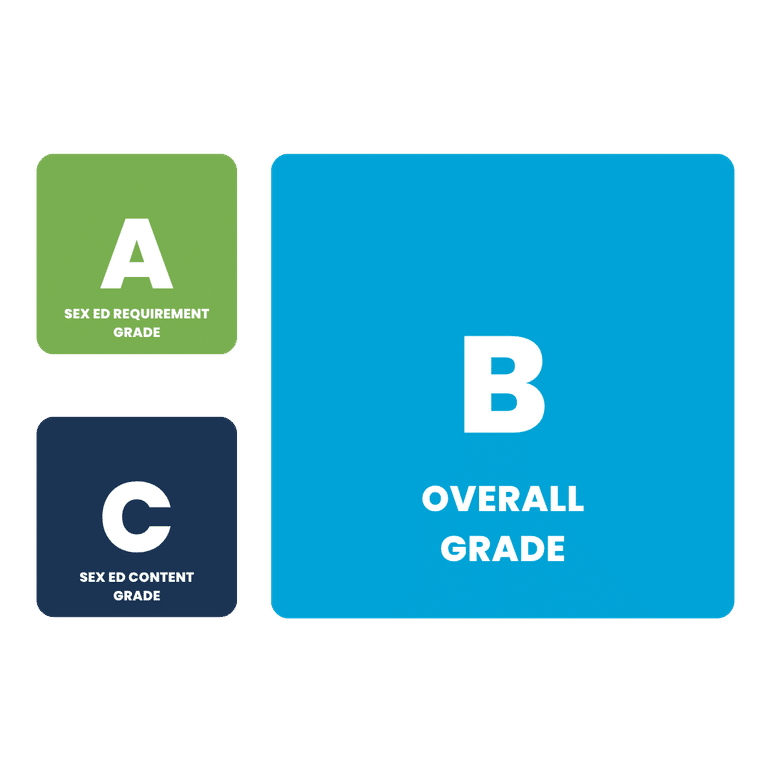
Current Requirement: Sex education, also known as “comprehensive family life education,” must be taught as part of health education in Maine.
- Curriculum must include family planning, HIV/STI prevention, healthy relationships, contraception, and more.
- Curriculum must emphasize abstinence.
- Curriculum must be medically accurate.
- Curriculum is not required to include instruction on sexual orientation or gender identity.
- The curriculum must include instruction on consent.
- Parents or guardians may remove their children from “comprehensive family life education” classes. This is called an “opt-out” policy.
*In 2026, this state’s overall grade changed slightly from 2025 because our grading methodology changed. For more information on grading methodology, see the Executive Summary on the State Profiles webpage.
Recent Legislation Shaping the State Landscape
No sex education-specific legislation was introduced in Maine in the 2026 legislative session.
In 2025, a failed bill, Legislative Document 1716, was introduced and attempted to require instruction in human growth and development no later than 3rd grade, including viewing a video of organ development and fetal development from conception to birth, in line with the broader trend of “Baby Olivia” bills aimed at perpetuating anti-abortion misinformation in the classroom.
Some movement has occurred to improve sex education standards in Maine in past sessions through bills like Legislative Document 254 (2023-2024). Initially introduced to update standards for sex education and consent education, the bill was amended to require increased funding to implement the comprehensive family life curriculum ($500,000). This bill ultimately failed to pass, but it shows the need for increased funding to implement policies requiring sex education effectively.
Advocates in Action
Advocates can take action to ensure young people in Maine have access to comprehensive sex education. After contacting their local schools, advocates can determine what curriculum is being used and if it aligns with the attributes of comprehensive sex education and the National Sex Education Standards. Further, advocates can contact their representatives to discuss the need for strengthening the quality of sex education by making it LGBTQIA+ inclusive and evidence-based in Maine. Advocates can also discuss the critical need for increased funding to help schools implement current sex education requirements. Advocates are encouraged to use the Community Action Toolkit to strengthen local organizing efforts. For additional guidance, advocates can contact the SIECUS Policy team by emailing [email protected] or join the Sexuality Education Policy Action Council (SEPAC) using our interest form.
More on Sex Ed in Maine…
State Law: A Closer Look
Maine Revised Statutes Annotated Title 22, §§ 1902 and 1910 mandate that the state’s Department of Health and Human Services “undertake initiatives to implement effective, comprehensive family life education services.” The state must provide:
- Training for teachers, parents, and community members in the development and implementation of comprehensive family life education curriculum;
- Resource staff persons to provide expert training, curriculum development, and implementation and evaluation services on a statewide basis;
- Funding to promote and coordinate community youth forums in communities identified as having high needs for comprehensive family life education;
- Funding for issue management and policy development training for school boards, superintendents, principals, and administrators; and
- Funding for grants to school-based comprehensive family life education programs to recognize outstanding performance and share strategies for success.
Comprehensive family life education is defined as being taught in kindergarten through grade 12. The information provided must be medically accurate, age-appropriate, respectful of community values, and encourage parent-child communication. Programs must emphasize abstinence and instruct on healthy relationships, contraception and family planning, STDS, affirmative consent, and conflict resolution.
In 2019, the state passed Legislative Directive 773, which amended Maine Revised Statutes Annotated Title 20 §4723 and requires schools to teach affirmative consent.
According to Maine Revised Statutes Annotated Title 22 §1911, parents or guardians may remove their children from “comprehensive family life education” classes. This is an “opt-out” policy.
State Standards
Maine’s Health Education Standards guide curriculum development and are based on the National Health Education Standards. These performance standards, however, do not explicitly mention sexual health education and refer only to existing statutes, while the department website provides resources to support schools with curriculum development.
Youth Sexual Health Data
The CDC’s Youth Risk Behavior Survey (YRBS) tracks adolescent health behaviors, including sexual health behaviors. To learn more about Maine’s 2023 YRBS results, click here. The CDC’s School Health Profiles measure school health policies, practices, and the sexual health topics taught in schools. To view Maine’s results from the 2024 School Health Profiles Survey, visit CDC’s School Health Profiles Explorer tool. Visit the CDC’s School Health Profiles for additional information on school health policies and practices.
The quality of sex education taught often reflects funding available for sex education programs. To learn more about federal funding streams, click here.