


Iowa State of Sex Ed
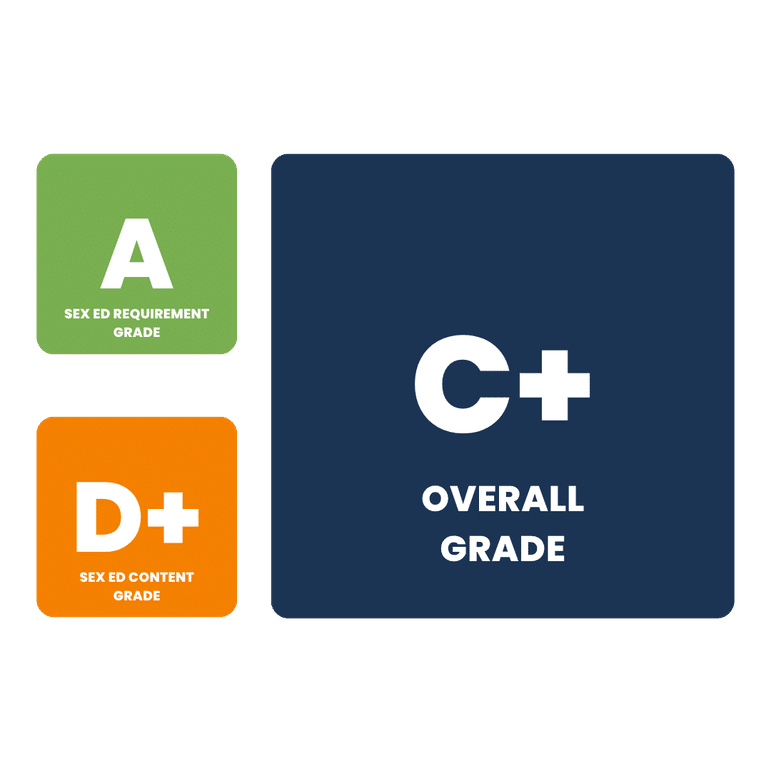
Current Requirement: Iowa requires sex education, also known as “human growth and development instruction.”
- Iowa has no standard regarding the inclusion of abstinence in sex education curriculum. However, it permits abstinence-based or abstinence-only materials as long as those materials fall within the parameters of the law.
- Instruction on STIs is required.
- The curriculum is not required to include instruction on consent or contraception, but it does teach healthy relationships.
- Sex education curriculum must be medically accurate, age-appropriate, and evidence-based.
- The curriculum must include instruction on human development inside the womb, high-definition fetal ultrasound video, and animation of fetal development, typically referring to “Meet Baby Olivia”.
- Instruction on gender identity or sexual orientation is banned for students in kindergarten through sixth grade.
- Parents or guardians may remove their children from any part of health education courses if the course conflicts with the student’s religious beliefs. This is called an “opt-out” policy.
In 2026, this state’s overall grade changed slightly from 2025 because our grading methodology changed. For more information on grading methodology, see the Executive Summary on the State Profiles webpage.
Recent Legislation Shaping the State Landscape
Advocates in Iowa have faced challenges in improving sex education policy, with anti-sex education lawmakers continuing to introduce restrictive legislation.
In the 2026 legislative session, four bills (HF 76, SF 115, S.S.B 3109, SF 2066) were introduced to limit sex education through a “Baby Olivia” teaching requirement, an opt-in policy for human growth and development instruction, and requirements to teach the “success sequence.” All failed to pass. In the 2025 legislative session, Senate File 175 (formerly SSB 1028) was enacted and requires human growth and development curriculum in grades 4-8 and health curriculum in grades 9-12 to include instruction on human development inside the womb, high-def fetal ultrasound video, and animation of fetal development.
Advocates have also worked tirelessly to introduce positive legislation, their most recent efforts culminating in the introduction of Senate File 172/House File 215 and Senate File 113, which would have required the Department of Education to distribute model guidelines for instruction on child sexual abuse prevention, requiring this instruction in grades K-6 and adding instruction on AIDS and HPV, specifically, back to human growth and development curriculum after previously being repealed. These bills ultimately failed to pass. In 2025, House File 480 was introduced but also failed to pass. The law would have required the addition of inclusive human sexuality and the effectiveness of contraceptive methods such as condoms, contraceptive implants, and IUDs to the human growth and development curriculum.
Advocates in Action
Advocates can take action in their communities to improve Iowa’s sex education requirements. They can contact their local board of education and ask what curriculum is used to teach human growth and development. Advocates can then vocalize the importance of implementing instruction that goes beyond abstinence. Advocates can also contact their representatives to discuss the critical need for a statewide comprehensive sex education mandate. Advocates are encouraged to use the Community Action Toolkit to strengthen local organizing efforts. For additional guidance, advocates can contact the SIECUS Policy team by emailing [email protected] or join the Sexuality Education Policy Action Council (SEPAC) using our interest form.
More on Sex Ed in Iowa…
State Law: A Closer Look
Iowa Code 256.11 mandates research-based, age-appropriate health education in grades K–12, and the code details what must be covered in each grade. In kindergarten, instruction must include “age-appropriate and research-based human growth and development.” In grades 1–6, “the health curriculum shall include the characteristics of communicable diseases.” Previously, the law continued to include “…acquired immunodeficiency syndrome [AIDS],” but this was repealed in 2023 by the enactment of SF 496. In grades 7–8, health education must include “the characteristics of sexually transmitted diseases [STDs].” Again, SF 496 removed instruction on AIDS.
In grades 9–12, students must take one unit of health instruction, which must include information on “age-appropriate and research-based human growth and development,” including the “prevention and control of disease, including age-appropriate and research-based information regarding sexually transmitted diseases.” Before the enactment of SF 496, high schoolers previously received instruction on AIDS, human papillomavirus (HPV), and the HPV vaccine.
Iowa Code § 279.50 mandates that the curriculum use materials that are up-to-date, age-appropriate, and research-based/medically accurate. Topics include “self-esteem, stress management, interpersonal relationships, and domestic abuse” for students in grades 1 – 6, and “human sexuality, self-esteem, stress management, interpersonal relationships, domestic abuse, and the prevention and control of disease, including sexually transmitted diseases” in grades 7 through 12. Furthermore, all information must be free of biases based on race, ethnicity, sexual orientation, or gender. School districts shall teach age-appropriate, science-based sex education as part of the health curriculum. Still, they may also use abstinence-only materials as long as those materials fall within the parameters of the law.
Parents or guardians may remove their children from any part of health education courses if the course conflicts with the student’s religious beliefs. This is called an “opt-out” policy.
In 2023, SF 496 was enacted into law and became Iowa Code § 279.80. In addition to the removal of HIV and HPV education, this prohibits “any program, curriculum, test, survey, questionnaire, promotion, or instruction relating to gender identity or sexual orientation to students in kindergarten through grade six.” In 2025, the passage of SF418 removed gender identity as a protected class under the Iowa Civil Rights Act, leaving trans and gender non-conforming Iowans especially vulnerable. The bill also revised SF 496 from 2023, changing the term “gender identity” to “gender theory,” and redefining “male,” “female,” and “sex” in Iowa state law. In May 2025, an Iowa district court judge ruled that some provisions of SF 496 are unconstitutional and are thus blocked from enforcement. This allows “neutral references” to gender identity and sexual orientation in instruction in grades 6 and below, prohibits “forced outing” based on name change (but still notifies parents about pronoun changes), blocks all book ban components of the bill, and allows student participation in clubs related to gender and sexuality (GSAs).
In 2025, Senate File 175 was enacted and now requires human growth and development curriculum to include fetal development instruction, a high-definition fetal ultrasound video, and animation of fetal development, and removes mention of experts like ACOG, AAP, and NASN in the definition of “research-based” and adds “unbiased” as it relates to sex education.
State Standards
Iowa provides the Iowa Core: K-12 21st Century Skills as guidance for curriculum development. The standards mention sexual health only as the ability to “describe the interrelationships of the wellness dimensions: physical, emotional, intellectual, environmental, social, sexual, and spiritual wellness during adolescence.” Additionally, the Iowa State Board of Education adopted the National Health Education Standards (NHES) as the state’s recommended physical education and health education standards in 2019. These standards make mention of disease prevention, communication skills, risk reduction, and informed decision-making but do not explicitly include sex education or sexual health.
Youth Sexual Health Data
The CDC’s Youth Risk Behavior Survey (YRBS) tracks adolescent health behaviors, including sexual health behaviors. As of 2019, Iowa no longer participates in YRBS data collection. Iowa currently administers its own Iowa Youth Survey in place of YRBS. To learn more about Iowa’s most recent results from 2023, click here. The CDC’s School Health Profiles measure school health policies, practices, and the sexual health topics taught in schools. To view Iowa’s results from the 2024 School Health Profiles Survey, visit CDC’s School Health Profiles Explorer tool. Visit the CDC’s School Health Profiles for additional information on school health policies and practices.
The quality of sex education taught often reflects funding available for sex education programs. To learn more about federal funding streams, click here.