


Indiana State of Sex Ed
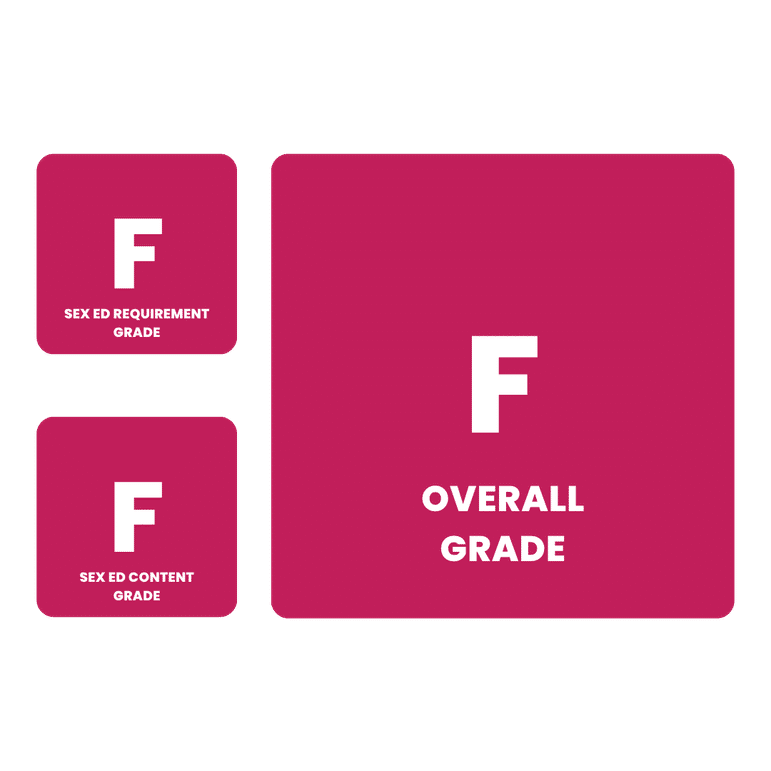
Current Requirement: Sex education is not required in schools, but HIV/AIDS instruction is.
- Curriculum must stress abstinence as the expected social standard.
- Indiana has no regulation regarding medically accurate sex education instruction, except instruction on human growth and development.
- Sex education is banned for students in kindergarten through third grade.
- Curriculum is not required to include instruction on sexual orientation or gender identity.
- Curriculum must include instruction on consent, but not healthy relationships.
- Schools must provide parents with a written request for consent before offering instruction on human sexuality. If no parental response is received within 21 days, a follow-up notice is required; if the parent is still unresponsive, the student will receive the instruction unless the parent opts out later. This includes elements of both an “opt-in” and an “opt-out” policy.
- Instruction on fetal development, including viewing a high-definition ultrasound video and animation, such as “Meet Baby Olivia,” is required under human growth and development instruction.
Recent Legislation Shaping the State Landscape
Advocates have faced a significant uphill battle in advancing positive sex education requirements across Indiana, with several restrictive bills being enacted.
In the 2026 legislative session, Senate Bill 88 was enacted and requires instruction on “success sequence” as a part of civics education. While not requiring this instruction under sex education or health education, instruction on the “success sequence” is yet another rebrand of harmful and stigmatizing “abstinence-only-until-marriage” programming.
In the 2025 legislative session, Senate Bill 442 was enacted and requires curriculum to include fetal development instruction, including a video showing fetal organ development in the womb and another showing all stages of human development from fertilization until birth (aligned with the larger trend of “Baby Olivia” bills). While the bill mentions that the fetal development instruction must be medically accurate, instruction on fetal development is not considered a best practice and is not included in the National Sex Education Standards. The bill also amends existing Indiana Code 20-30-5-17 to require schools to provide parents with a written request for consent before offering instruction on human sexuality. This request must include a summary of the instruction and a direct link to the online materials. If no parent responds within 21 days, schools must send a follow-up notice; if the parent remains unresponsive, the student will receive the instruction unless the parent opts out later. This confusing process contains elements of both an opt-in and opt-out policy. Lastly, the bill also requires governing authorities to approve and publish detailed information about the instruction, including the weeks when it will occur, the settings where male and female students will be taught, the instructors’ gender, and a description of the topics covered. All learning materials used must be approved and listed on the school’s website. Surprisingly, the bill includes one positive addition, which is “age-appropriate instruction concerning the importance of consent to sexual activity between two individuals.”
Attempts at passing progressive legislation have been unsuccessful so far. House Bill 1303 was introduced in the 2025 legislative session but did not pass. The bill would have started HIV/AIDS education in grade 5 and mandated education at least once a year until graduation, also including the explicit mention of STI education. It would require comprehensive, medically accurate, and age-appropriate sexual health education once for students in elementary school, and then twice in middle and high school.
Advocates in Action
Advocates can take action in their communities to address gaps in Indiana’s sex education requirements. Advocates can then vocalize the importance of removing or opting out of harmful instructional requirements on the “success sequence” or “Baby Olivia”. Advocates can also contact their representatives to discuss the critical need to repeal restrictive sex education policies and for a statewide sex education mandate. Advocates are encouraged to use the Community Action Toolkit to strengthen local organizing efforts. For additional guidance, advocates can contact the SIECUS Policy team by emailing [email protected] or join the Sexuality Education Policy Action Council (SEPAC) using our interest form.
More on Sex Ed in Indiana…
State Law: A Closer Look
Indiana Code 20-30-5-12 and 20-34-3-17 require that schools provide instruction on acquired immunodeficiency syndrome (AIDS) and “integrate this effort to the extent possible with instruction on other dangerous communicable diseases.” The law states that the Department of Education must work with the Department of Health to develop AIDS prevention educational materials and make them available to school districts. These materials must “stress the moral aspects of abstinence from sexual activity” and “state that the best way to avoid AIDS is for young people to refrain from sexual activity until they are ready as adults to establish, in the context of marriage, a mutually faithful monogamous relationship.”
Indiana Code 20-30-5-13 requires that, with respect to instruction on sex education and sexually transmitted diseases (STDs), accredited schools meet the following criteria:
- Require a teacher to teach abstinence from sexual activity outside of marriage as the expected standard for all school-age children;
- Include in the instruction that abstinence from sexual activity is the only certain way to avoid out-of-wedlock pregnancy, STIs, and other associated health problems; and
- Include in the instruction that the best way to avoid STIs and other associated health problems is to establish a mutually faithful monogamous relationship in the context of marriage.
- Include age-appropriate instruction concerning the importance of consent to sexual activity between two individuals; and
- …provide an in-person presentation on human growth and development during pregnancy that is medically accurate and age-appropriate and includes the following:
- (A) A high-definition ultrasound video, at least three (3) minutes in duration, showing the development of the brain, heart, sex organs, and other vital organs in early fetal development.
- (B) A high-quality computer-generated rendering or animation showing the process of fertilization and each stage of fetal development inside the uterus, noting significant markers in cell growth and organ development for every week of pregnancy from fertilization to birth.”
These last two requirements were added with the passage of Senate Bill 442 on May 5, 2025.
In 2018, Indiana enacted Public Law 154, which created Indiana Code 20-30-5-17, which governs parental permission for sex education instruction. Senate Bill 442 updated this code. Schools must now provide parents with a written request for consent before offering instruction on human sexuality. This request must include a summary of the instruction and a direct link to the online materials. If no parental response is received within 21 days, a follow-up notice is required; if the parent is still unresponsive, the student will receive the instruction unless the parent opts out later. This includes elements of both an “opt-in” and an “opt-out” policy.
In 2023, Indiana enacted Public Law 248 (formerly known as House Bill 1608), which adds a new chapter to the Indiana Code (IC 20-30-17-2) prohibiting instruction on human sexuality before third grade.
State Standards
The Indiana Department of Education provides the Indiana Academic Standards for Health and Wellness, which are consistent with Indiana Code 20-30-5-13, as a foundation for schools that provide sex education. The Indiana Department of Education also provides an overview of the Health and Wellness standards. These standards do not discuss sex education, although the Health and Wellness standards overview includes Indiana statutes related to sex education.
Youth Sexual Health Data
The CDC’s Youth Risk Behavior Survey (YRBS) tracks adolescent health behaviors, including sexual health behaviors. To learn more about Indiana’s 2023 YRBS results, click here. The CDC’s School Health Profiles measure school health policies, practices, and the sexual health topics taught in schools. To view Indiana’s results from the 2024 School Health Profiles Survey, visit CDC’s School Health Profiles Explorer tool. Visit the CDC’s School Health Profiles for additional information on school health policies and practices.
The quality of sex education taught often reflects funding available for sex education programs. To learn more about federal funding streams, click here.