


Washington State of Sex Ed
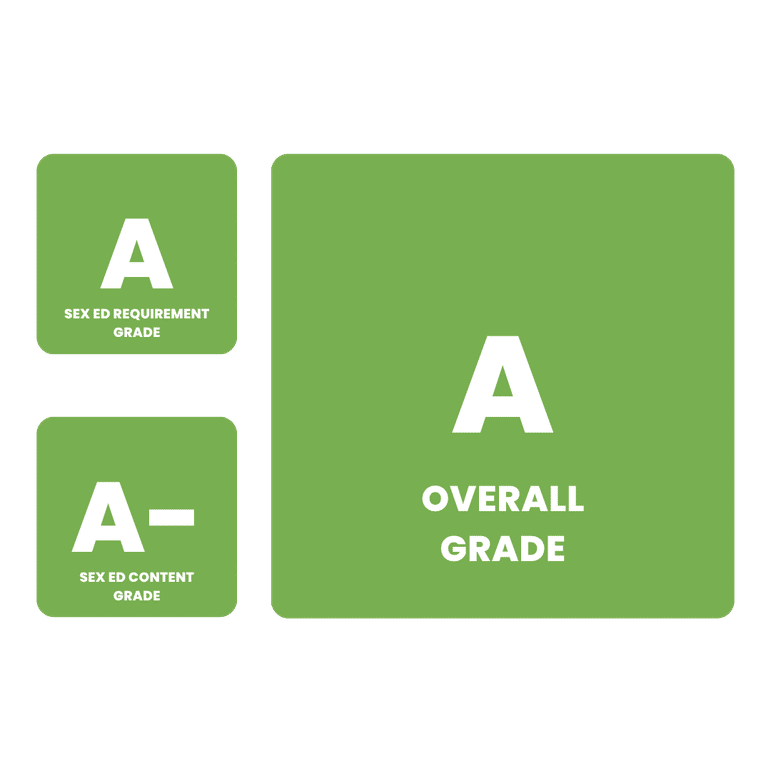
Current Requirement: Washington requires comprehensive sex education.
- Curriculum must be medically accurate.
- Curriculum must stress abstinence, but abstinence may not be taught to the exclusion of other materials and instruction on contraceptives and disease prevention.
- Curriculum must include all students, regardless of sexual orientation or gender identity.
- The curriculum must include instruction on affirmative consent.
- Curriculum must teach about healthy relationships with friends, family, and partners.
- Parents may also remove their children from the class with written notification. This is called an “opt-out” policy.
Recent Legislation Shaping the State Landscape
Since the passage of the Healthy Youth Act, anti-sex education legislators continue to introduce bills to restrict access to sex education to no avail. In 2026, two failed bills were introduced: Senate Bill 6300 and Senate Bill 6285, which would have authorized local school districts to use alternative learning standards instead of state learning standards for sex education, allowing a loophole out of comprehensive sex education, and legislation repealing the requirement to provide menstrual hygiene products in schools and repealing the requirement to provide comprehensive sex education, respectively. In 2025, Senate Bill 5137 was introduced, which would have shifted Washington State from an “opt out” to an “opt in” policy, where parents must provide consent for their child to receive sex education. This bill ultimately failed. In 2024, three unsuccessful restrictive sex education bills were introduced: House Bill 1601, Senate Bill 5009, and Senate Bill 6204, which also sought to require parental consent before sex education is taught, create procedures for parental objection to instructional materials, and repeal the requirement for comprehensive sex education in Washington State.
Advocates in Action
Advocates can take action to ensure young people in their community have access to comprehensive sex education by ensuring compliance with the current mandate and staying vigilant against the anti-sex education opposition looking to roll back progressive policies that support respect and inclusion in educational spaces.
Advocates can contact their representatives to discuss the need for legislation that examines and requires compliance with and implementation of the current comprehensive sex education policy. Advocates are encouraged to use the Community Action Toolkit to strengthen local organizing efforts. For additional guidance, advocates can contact the SIECUS Policy team by emailing [email protected] or join the Sexuality Education Policy Action Council (SEPAC) using our interest form.
More on Sex Ed in Washington…
State Law: A Closer Look
The Revised Code of Washington, §§ 28A.230.070 requires schools to provide instruction on human immunodeficiency virus (HIV)/acquired immunodeficiency syndrome (AIDS), “stress[ing] that abstinence from sexual activity is the only certain means for the prevention of the spread or contraction of the AIDS virus through sexual contact.” HIV/AIDS-prevention instruction must be given at least once each school year beginning in fifth grade and must “teach that condoms and other artificial means of birth control are not a certain means of preventing the spread of [AIDS], and reliance on condoms puts a person at risk for exposure to the disease.” Information must be medically accurate. To verify medical accuracy, the Washington Department of Health Office on HIV/AIDS must review and approve all HIV/AIDS curricula and supporting materials. Health education that includes instruction on “methods to prevent exposure to and transmission of sexually transmitted diseases (STDs)” is also required by Revised Code of Washington §§ 28A.230.020.
The Revised Code of Washington, § 28A.300.475, known as the Healthy Youth Act, was amended in 2020 to require every Washington public school to provide comprehensive sex education. In addition to the previous mandate that required curriculum to be medically and scientifically accurate and age-appropriate, curriculum must now include all students, regardless of their protected class under chapter 49.60 of the Revised Code of Washington. The curriculum must also include instruction on affirmative consent and bystander training. Comprehensive sex education must be provided once to students in kindergarten through grade three, once to students in grades 4-5, twice to students in grades 6-8, and twice to students in 9-12. Parents or guardians may remove their children from HIV/AIDS-prevention education if they have attended an information session about the HIV/AIDS curriculum and its presentation. If a school district chooses to provide sex education, parents may also remove their children from the class with written notification. This is called an “opt-out” policy.
State Standards
The Washington Office of Superintendent of Public Instruction and the Department of Health developed guidelines titled Guidelines for Sexual Health and Disease Prevention. Any sex education program implemented in schools must be consistent with these guidelines. Washington also provides guidance on best practices for sexual health education in the Health and Physical Education K-12 Learning Standards, released in 2016, and a thorough list of other curricula reviewed and approved by the Department of Health. Washington also provides health education standards to guide curriculum development. Understanding “how to maintain sexual health throughout life” and “how communicable diseases are transmitted,” as well as discussion on harassment and bullying due to sexual orientation, are included.
Youth Sexual Health Data
The CDC’s Youth Risk Behavior Survey (YRBS) tracks adolescent health behaviors, including sexual health behaviors. The State of Washington does not participate in CDC’s Youth Risk Behavior Survey (YRBS) and instead conducts its own Healthy Youth Survey. To learn more about Washington’s recent Healthy Youth Survey results, click here. The CDC’s School Health Profiles measure school health policies, practices, and the sexual health topics taught in schools. To view Washington’s results from the 2024 School Health Profiles Survey, visit CDC’s School Health Profiles Explorer tool. Visit the CDC’s School Health Profiles for additional information on school health policies and practices.
The quality of sex education taught often reflects funding available for sex education programs. To learn more about federal funding streams, click here.