


Vermont State of Sex Ed
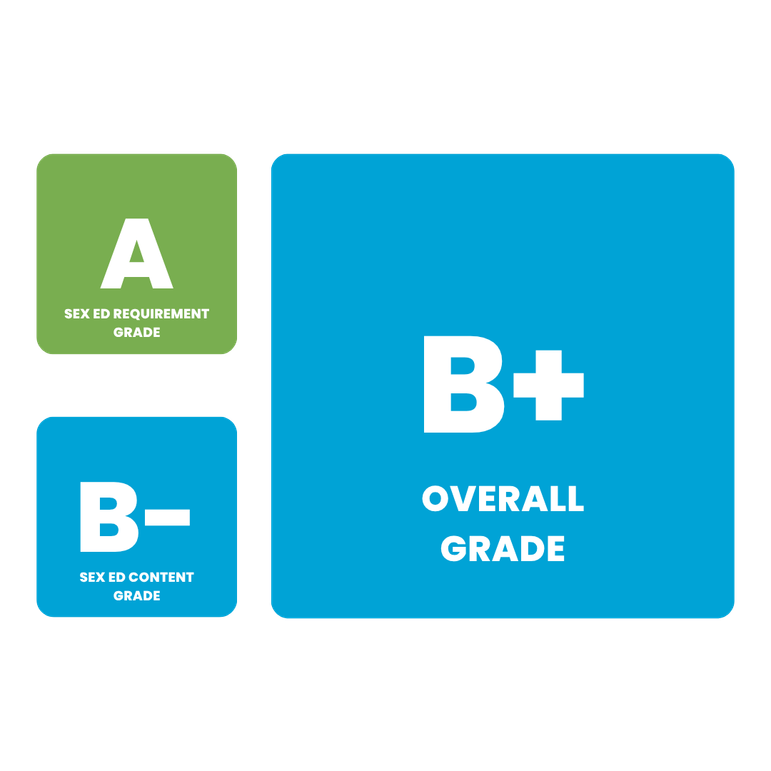
Current Requirement: Vermont schools must teach sex education as part of “comprehensive health education.”
- Curriculum must include human development, sexuality, reproduction, STI prevention, family life, contraception, and healthy relationships.
- Curriculum must include instruction on abstinence.
- Curriculum does not require instruction on sexual orientation or gender identity. However, the curriculum must be culturally competent and inclusive.
- Curriculum is not required to include instruction on consent.
- Parents or guardians may remove their children from instruction about disease if the content conflicts with their religious beliefs. This is called an “opt-out” policy.
- Vermont has no law regarding medically accurate instruction.
*In 2026, the overall grade of this state changed slightly from 2025 as a result of a change in our grading methodology. For more information on grading methodology, see the Executive Summary on the State Profiles webpage.
Recent Legislation Shaping the State Landscape
Vermont has had no sex education-specific legislative developments in recent years.
Beyond sex education, SIECUS has tracked legislation in recent legislative sessions that would impact Vermont schools by establishing protections for diversity and inclusion programming in the classroom and for LGBTQIA+ students against book bans and censorship. However, none of these bills have passed.
Advocates in Action
Advocates in Vermont can take action to address compliance with the comprehensive health education law and ensure that young people in their community have access to quality sex education. After identifying what topics are missing from local sex education, advocates can vocalize the importance of implementing specific elements of sex education, such as the inclusion of consent and discussion on sexual orientation and gender identity.
Advocates can also contact their representatives to discuss the need for inclusive, medically accurate sex education in Vermont schools and aligning state standards with the National Sex Education Standards, using the Community Action Toolkit to strengthen local organizing efforts. For additional guidance, advocates can contact the SIECUS Policy team by emailing [email protected] or join the Sexuality Education Policy Action Council (SEPAC) using our interest form.
More on Sex Ed in Vermont…
State Law: A Closer Look
Vermont Statutes Annotated, Title 16 §§ 131, 133, 134, and 135 require schools to include instruction on sexual health topics as part of their comprehensive health program. Schools must teach comprehensive health instruction in elementary and secondary schools. The comprehensive health program has 10 components that students must learn, four of which are related to sexuality:
- Body structure and function, including the physical, psychosocial, and psychological basis of human development, sexuality, and reproduction
- Disease, such as human immunodeficiency virus (HIV) infection, other sexually transmitted diseases (STDs), as well as other communicable diseases, and the prevention of disease…
- Family health and mental health, including instruction that promotes the development of responsible personal behavior involving decision making about sexual activity, including abstinence; skills that strengthen existing family ties involving communication, cooperation, and interaction between parents and students; and instruction to aid in the establishment of strong family life in the future, thereby contributing to the enrichment of the community…
- Human growth and development, including understanding the physical, emotional, and social elements of individual development and interpersonal relationships, including instruction in parenting methods and styles. This shall include information regarding the possible outcomes of premature sexual activity, contraceptives, adolescent pregnancy, childbirth, adoption, and abortion.
Parents or guardians may remove their children from instruction on “disease, its symptoms, development, and treatment” if the content conflicts with their religious beliefs. This is called an “opt-out” policy.
State Standards
In 2024, the State Board of Education adopted the SHAPE America National Health Education Standards as a framework for schools to develop health curricula. Schools must align their curriculum with these standards; however, these standards don’t specify sexual health concepts. The State Board of Education provides a list of resources for implementing sexual health education, including the National Sex Education Standards, on its website. These standards, however, are not required and are meant as guidance.
Youth Sexual Health Data
The CDC’s Youth Risk Behavior Survey (YRBS) tracks adolescent health behaviors, including sexual health behaviors. To learn more about Vermont’s 2023 YRBS results, click here. The CDC’s School Health Profiles measure school health policies, practices, and the sexual health topics taught in schools. To view Vermont’s results from the 2024 School Health Profiles Survey, visit CDC’s School Health Profiles Explorer tool. Visit the CDC’s School Health Profiles for additional information on school health policies and practices.
The quality of sex education taught often reflects funding available for sex education programs. To learn more about federal funding streams, click here.