


Rhode Island State of Sex Ed
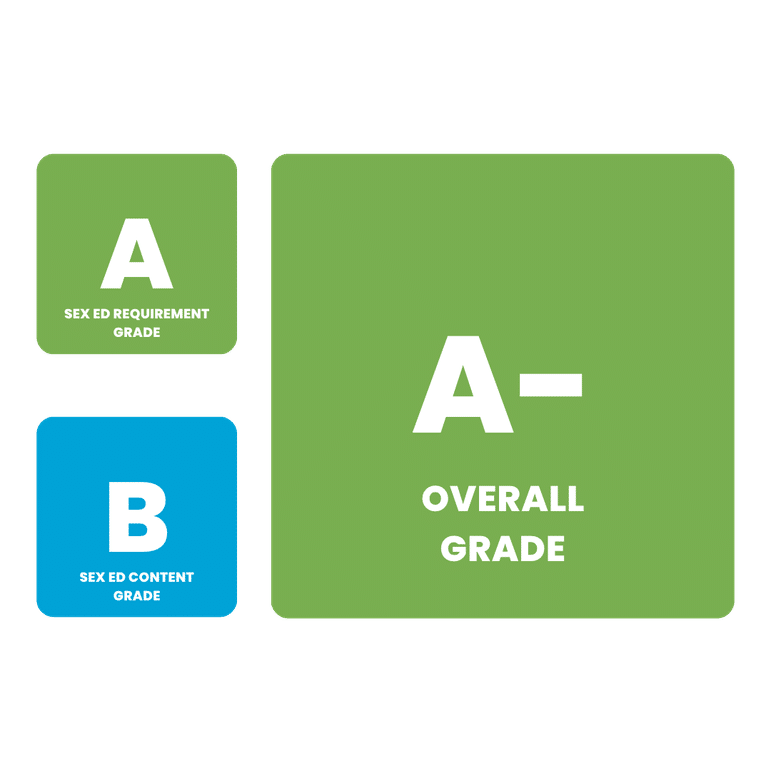
Current Requirement: Rhode Island requires sex education as part of comprehensive health education.
- By law, curriculum is not required to align with the National Sex Education Standards; however, the standards are cited as a resource in state health standards.
- Curriculum must be age-appropriate, evidence-based, culturally responsive, and medically accurate.
- Curriculum must stress abstinence.
- Curriculum is required, according to health standards, to include instruction on sexual orientation and gender identity, HIV, STIs, and contraception.
- Curriculum must include instruction on consent and discussion of varying types of dating violence by law.
- Parents must be notified of sex education classes and may view the curriculum by submitting a written request. Students may be removed from instruction by written notification from the parent to the principal. This is referred to as an “opt-out” policy.
Recent Legislation Shaping the State Landscape
In the 2026 legislative session, Rhode Island lawmakers introduced two so-called “parental rights” bills that had implications for sex education in schools. While both bills ultimately failed, Senate Bill 2485 would have established a “parental bill of rights” in education, requiring school districts to create procedures for parental participation, including procedures for parents to remove a child from sex education or HIV/AIDS instruction and to receive advance notice of such instruction. Senate Bill 2527 went a step further by requiring schools to provide sex education curriculum materials to parents beforehand and requiring parental consent before enrollment, which would have created an “opt-in” policy. In 2025, 4 similar unsuccessful bills (Senate Bill 284, Senate Bill 396, Senate Bill 395, House Bill 5837) were introduced that aimed to increase parental oversight in sex education and shift to an “opt-in” policy, which would restrict student participation in sex education. Similarly, in 2024, two failed bills were introduced, Senate Bill 2517 and companion House Bill 7873, to shift to an “opt-in ” policy. These efforts showcase the opposition’s efforts to undermine the current strong sex education policy in Rhode Island.
Advocates in Action
Advocates can take action in their communities to further promote access to quality and inclusive sex education for all students in Rhode Island. They can contact their local school district to ensure the curriculum aligns with state standards and is evidence-based. They can contact their state board of education to ensure sex education is implemented uniformly across all districts, promoting equity.
Advocates can also contact their representatives to discuss the need to align the required sex education curriculum with the National Sex Education Standards, removing emphasis on abstinence from law, and ensuring all pregnancy outcomes are instructed upon, including abortion. They can also encourage their representatives to continue to defend against attacks on sex education that seek to shift to an “opt-in” policy. Advocates can use the Community Action Toolkit to strengthen local organizing efforts. For additional guidance, advocates can contact the SIECUS Policy team by emailing [email protected] or join the Sexuality Education Policy Action Council (SEPAC) using our interest form.
More on Sex Ed in Rhode Island…
State Law: A Closer Look
Rhode Island schools are required by Rhode Island General Laws §§ 16-1-5, 16-22-17 and 16-22-18 to provide instruction including “HIV (Human Immunodeficiency Virus)/AIDS (Acquired Immune Deficiency Syndrome): the causes, effects, treatment, and prevention”. Schools must also teach health education in grades 1-12. Further, they are required to teach “the responsibilities of family membership and adulthood, including issues related to reproduction, abstinence, dating and dating violence, marriage, and parenthood, as well as information about sexually transmitted diseases [STDs], sexuality, and sexual orientation.” Programs must be age-appropriate and evidence-based, and “address abstinence from sexual activity as the preferred means of prevention.” Parents must be notified of sex education classes and may view the curriculum by submitting a written request. Students may be removed from instruction by written notification from the parent to the principal. This is called an “opt-out” policy.
Additionally, Rhode Island General Law §§ 16-22-24 mandates age-appropriate dating violence education for students in grades 7 through 12. Students must be provided with their school’s dating violence policy, and instruction must include “defining dating violence; recognizing dating violence warning signs; and characteristics of healthy relationships.” Students may also be removed from this instruction via the state’s opt-out policy.
State Standards
Rhode Island’s state health education standards must be implemented under RI Gen L § 16-22-4, guided by the Curriculum Framework for Health Education K-12. “Sexuality and Family Life” represents its own instructional outcome, with components such as “responsibilities of family membership and adulthood, issues related to reproduction, abstinence, dating and dating violence, marriage, parenthood, information about sexually transmitted diseases, the law and meaning of consent, sexuality and sexual orientation, as part of comprehensive sexuality education pursuant to R.I. Gen. Laws § 16-22-18. Health education curriculum must be age-appropriate for K-12 students, evidence-based, medically accurate, and qualify as “culturally responsive and sustaining education.”
The Rhode Island state health standards cite the National Sex Education Standards as a resource.
Youth Sexual Health Data
The CDC’s Youth Risk Behavior Survey (YRBS) tracks adolescent health behaviors, including sexual health behaviors. To learn more about Rhode Island’s 2023 YRBS results, click here. The CDC’s School Health Profiles measure school health policies, practices, and the sexual health topics taught in schools. To view Rhode Island’s results from the 2024 School Health Profiles Survey, visit CDC’s School Health Profiles Explorer tool. Visit the CDC’s School Health Profiles for additional information on school health policies and practices.
The quality of sex education taught often reflects funding available for sex education programs. To learn more about federal funding streams, click here.