


New Jersey State of Sex Ed
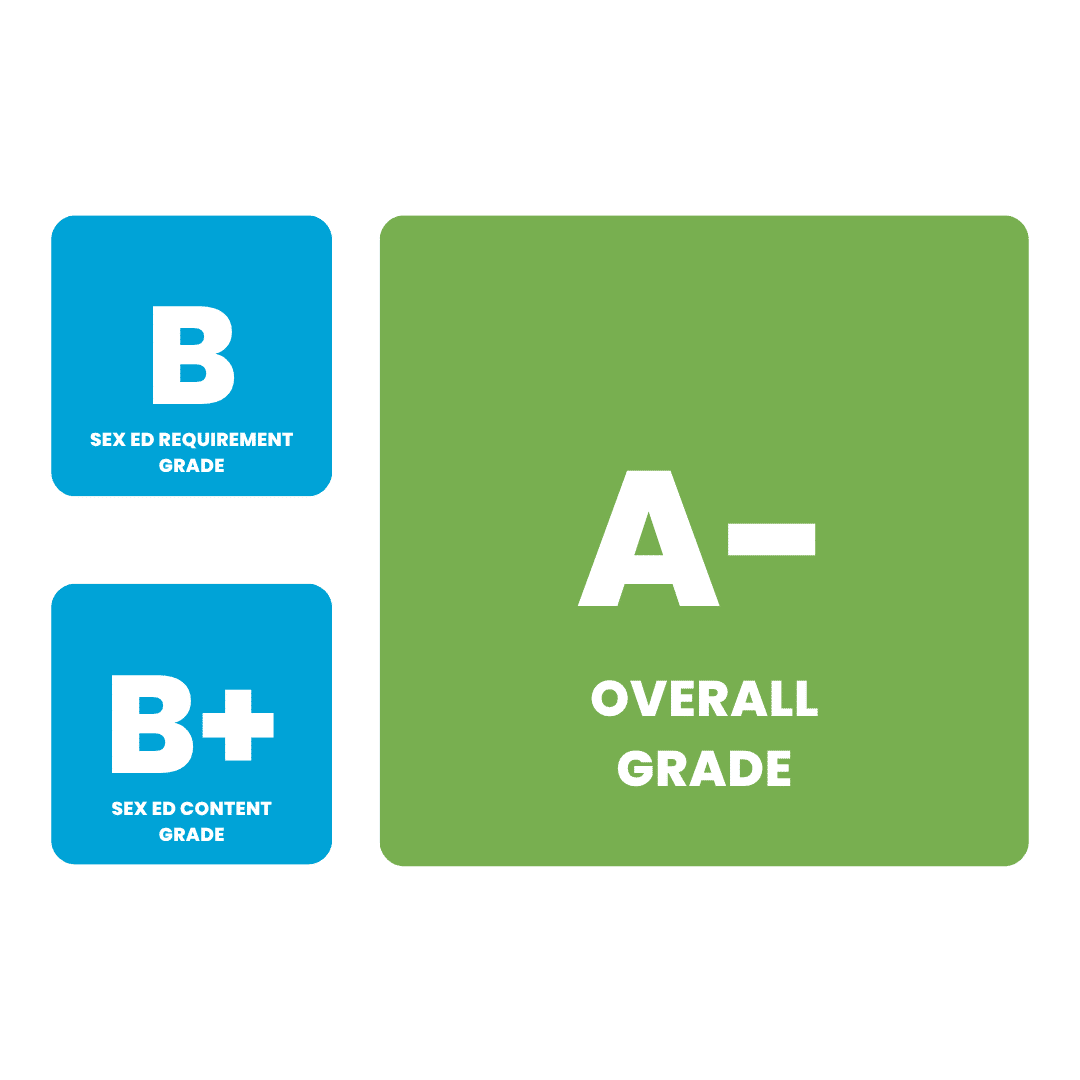
Current Requirement: New Jersey provides sex education under its state health education and physical education standards, which public schools must follow.
- Curriculum must include instruction on sexual orientation and gender identity, pregnancy outcomes, and contraception.
- Curriculum must include instruction on consent and healthy relationships.
- New Jersey allows parents or guardians to remove their children from any part of the health, family life, or sex education classes if it conflicts with their beliefs. This is called an “opt-out” policy.
- Curriculum must be age-appropriate, evidence-based, culturally appropriate, and medically accurate.
Recent Legislation Shaping the State Landscape
New Jersey continues to be a battleground for sex education policy, with both opponents and proponents of sex education introducing several bills each legislative session. In the 2026-2027 session, the New Jersey Legislature introduced several restrictive sex education bills, largely in response to the updated New Jersey Learning Standards for Health Education, which took effect in the Fall of 2022. Assembly Bill 3021 and Assembly Bill 1605 seek to ban instruction on sex, sexual intercourse, abortion, contraception, sexual orientation, and gender identity in grades K-5, and require parental consent (an opt-in policy) if this instruction is provided in grades 6-12. Assembly Bill 857 and its companion Senate Bill 1968 would also require parental consent before student participation in sex education. Assembly Bill 2880 and its companion Senate Bill 1962 would direct the State Board of Education to rescind the 2020 update to the New Jersey health education standards and establish a parental advisory committee to adopt standards for health instruction going forward. Assembly Concurrent Resolution 18 would oppose the updated New Jersey Health Education standards entirely. Contrasting to these legislative attacks, progressive lawmakers also introduced Senate Bill 2685 and its companion Assembly Bill 2183, which would require schools to provide instruction on menstrual health and hygiene to grades 4-12 as part of health education, and Senate Bill 555 which would require instruction on sexual abuse and assault awareness and prevention in grades preschool through 12 to include now content on Internet safety and dangers of online predators. All the aforementioned bills remain active, as New Jersey has a two-year session.
In the 2024-2025 legislative session, lawmakers introduced similar restrictive sex-education legislation. Assembly Bill 670 would have banned instruction in family life education, sex education, sexual health, sexual orientation, or gender identity to students in preschool through grade four. Assembly Bill 2580, dubbed the “Children’s Innocence Protection Act,” would have banned sex education, discussion of gender, sexuality, abortion, or contraception from schools. Assembly Concurrent Resolution 131, Assembly Bill 1283, and Senate Bill 2117 all directly opposed or aimed to rescind the revised standards. Finally, Senate Bill 2123 and companion Assembly Bill 1519 sought to require parental consent for family life or sex education, aiming to switch New Jersey from an opt-out to an opt-in state. All of the above bills ultimately failed to pass.
Advocates in Action
Advocates can take action in their communities to strengthen adherence to New Jersey’s sex education standards. They can contact their local school districts to ensure the curriculum being used is comprehensive and aligned with both the latest Content Standards for Comprehensive Health and Physical Education and the National Sex Education Standards.
Advocates can also contact their representatives to discuss the critical need for a statewide sex education mandate that adheres to the National Sex Education Standards. Advocates are encouraged to use the Community Action Toolkit to strengthen local organizing efforts. For additional guidance, advocates can contact the SIECUS Policy team by emailing [email protected] or join the Sexuality Education Policy Action Council (SEPAC) using our interest form.
More on Sex Ed in New Jersey…
State Law: A Closer Look
New Jersey law, §§ 18A:35-7 and §§ 18A:35-8, mandates at least 150 minutes of health education during each school week in grades 1-12. In addition, high school students must acquire 3.75 credits of health education each year.
While all sex education programs must provide a comprehensive range of high-quality information, state law also requires that programs and curricula stress abstinence (NJ Rev Stat § 18A:35-4.20). [iii] In addition, “[a]ny instruction concerning the use of contraceptives or prophylactics such as condoms shall also include information on their failure rates for preventing pregnancy, human immunodeficiency virus (HIV) and other [sexually transmitted diseases] (STDs) in actual use among adolescent populations and shall clearly explain the difference between risk reduction through the use of such devices and risk elimination through abstinence.”
In 2018, New Jersey enrolled P.L.2018, c.80, which requires instruction on the “social, emotional, and legal consequences of distributing and soliciting sexually explicit images through electronic means” at least once in middle school as part of the health education curriculum.
In 2019, §§ 18A:35-4.37 was enacted, which requires age-appropriate instruction in grades 6-12 on the law and the meaning of consent. §§ 18A:35-4.40 require instruction on the “New Jersey Safe Haven Infant Protection Act” in grades 9-12. §§ 18A:35-4.5a require instruction on age-appropriate sexual abuse and assault awareness and prevention education in preschool through grade 12. §§ 18A:35-4.33 requires instruction on the social, emotional, and legal consequences of distributing and soliciting sexually explicit images once during middle school.
New Jersey allows parents or guardians to remove their children from any part of the health, family life, or sex education classes if it is “in conflict with [their] conscience, or sincerely held moral or religious beliefs.” This is called an “opt-out” policy.
State Standards
While the law does not specify sex education as part of health education, school districts must align their health education curricula with the New Jersey Department of Education’s Core Curriculum Content Standards for Comprehensive Health and Physical Education. The required disciplinary concepts of the Comprehensive Health & Physical Education (CHPE) standards include: Personal Growth and Development, Pregnancy and Parenting, Emotional Health, Social and Sexual Health, Community Health Services and Support Movement Skills and Concepts, Physical Fitness, Lifelong Fitness, Nutrition, Personal Safety, Health Conditions, Diseases and Medicines, Alcohol, Tobacco and other Drug, and, Dependency, Substances Disorder and Treatment. Instructional benchmarks and concepts correspond to grade levels K-12 and build on skills and concepts throughout a student’s development.
Within the disciplinary concept of Social and Sexual Health, described as “a person’s ability to communicate and interact with others efficiently. Individuals can form meaningful relationships with others and interact in healthy, appropriate ways. It encompasses respect and acceptance of differences in an individual’s race, religion, gender identity, gender expression, ethnicity, disability, socioeconomic background, and perspectives on health-related decisions. The extent to which people connect with others in different environments, adapt to various social and sexual situations, feel supported by individuals and institutions, and experience a sense of belonging all contribute to social and sexual health. Pregnancy and Parenting is described as “…stages in life that impact all aspects of one’s wellness. Regardless of the circumstances, pregnancy and parenting change an individual’s emotional, financial, physical, mental, and social well-being. These stages can include many happy experiences but can also bring great challenges. Like any new skill, parenting takes knowledge, skills, and practice to be successful. However, other factors, such as medical and financial challenges, can make this stage of life more difficult. Preparation is the key to a healthy pregnancy, delivery, and transition to parenting.”
Youth Sexual Health Data
The CDC’s Youth Risk Behavior Survey (YRBS) tracks adolescent health behaviors, including sexual health behaviors. To learn more about New Jersey’s 2023 YRBS results, click here. The CDC’s School Health Profiles measure school health policies, practices, and the sexual health topics taught in schools. New Jersey’s 2024 School Health Profiles response rate was not high enough to be representative and thus is excluded from the CDC’s School Health Profiles Explorer tool. The exception is Newark, NJ, whose data is available on the Explorer tool. Visit the CDC’s School Health Profiles for additional information on school health policies and practices.
The quality of sex education taught often reflects funding available for sex education programs. To learn more about federal funding streams, click here.