


Nevada State of Sex Ed
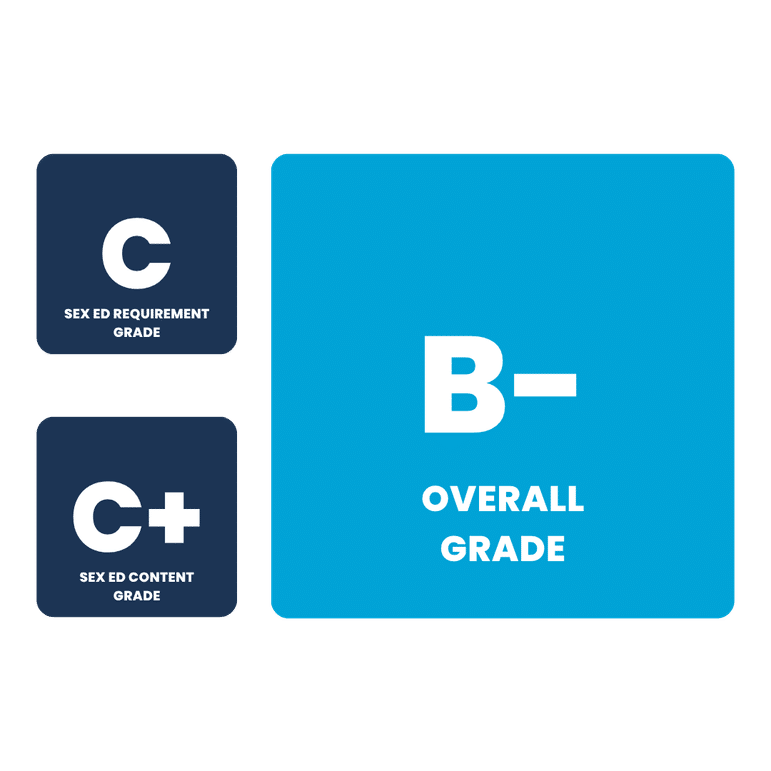
Current Requirement: Sex education and HIV/STI education are required in Nevada.
- Curriculum is not required to include instruction on sexual orientation and gender identity.
- Curriculum is not required to include instruction on consent.
- Required state standards require instruction on sex education and HIV/AIDS education must be evidence-based.
- Instruction must include education on consent, healthy relationships, contraception, and pregnancy options.
- Parents must provide written consent for their children to participate in human sexuality education. This is called an “opt-in” policy.
- State standards require age-appropriate, culturally responsive sex education and evidence-based HIV education. Instruction must include education on consent, detailed healthy relationships, contraception, and pregnancy options, including abortion.
*In 2026, this state’s overall grade changed slightly from 2025 because our grading methodology changed. For more information on grading methodology, see the Executive Summary on the State Profiles webpage.
Recent Legislation Shaping the State Landscape
The Nevada Legislature does not convene in even years; therefore, it had no legislative developments in 2026.
In 2025, Assembly Bill 205 passed both chambers but was ultimately vetoed. This bill would have shifted sex ed from opt-in to opt-out, expanding student access. Other curriculum-focused legislation in 2025, such as Assembly Bill 464, would have strengthened the implementation of sex education and prohibited the state board and educators from repealing or refusing to enforce instruction on the human reproductive system. However, the bill did not advance during the legislative session.
Advocates in Action
Advocates can encourage lawmakers in Nevada to advocate for policies that increase student access to sex education, such as opt-out policies. Advocates can also contact state legislators to support a statewide comprehensive sex education mandate and use the Community Action Toolkit to strengthen local organizing efforts. For additional guidance, advocates can contact the SIECUS Policy team by emailing [email protected] or join the Sexuality Education Policy Action Council (SEPAC) using our interest form.
More on Sex Ed in Nevada…
State Law: A Closer Look
Nevada Revised Statutes § 389.036 mandates that each school district’s board of trustees “shall establish a course or unit of a course of”:
- Factual instruction concerning acquired immunodeficiency syndrome (AIDS); and
- Instruction on the human reproductive system, related communicable diseases, and sexual responsibility.
The subjects of the courses may be taught only by a teacher or school nurse whose qualifications the board of trustees has previously approved. Furthermore, each board of trustees must appoint an advisory committee to advise on course content, age appropriateness, and instructional materials. Advisory committees shall consist of five parents who have children in the school district and four representatives from the medicine, counseling, religion, student, or teaching communities.
Nevada law also requires that “the parent or guardian of each pupil to whom a course is offered must first be given written notice that the course will be offered. The notice must be given in the usual manner the local district uses to transmit written material to parents. It must include a form for the signature of the pupil’s parent or guardian consenting to his attendance. Upon receipt of the parent’s or guardian’s written consent, the pupil may attend the course. If the written consent of the parent or guardian is not received, he must be excused from such attendance without any penalty as to credits or academic standing.” This is referred to as an “opt-in” policy.
State Standards
As of the 2022 – 2023 school year, all school districts are expected to fully implement the 2020 Nevada Academic Content Standards (NVACS) for Health, created by the Nevada Department of Education. These define what students should know by the end of each grade and include required educational outcomes on specific topics. The NVACS instructs that HIV/AIDS instruction must be evidence-based, and required topics include consent, healthy relationships, contraception, abstinence, and laws related to “pregnancy, abortion, adoption, and parenting.”
Youth Sexual Health Data
The CDC’s Youth Risk Behavior Survey (YRBS) tracks adolescent health behaviors, including sexual health behaviors. To learn more about Nevada’s 2023 YRBS results, click here. The CDC’s School Health Profiles measure school health policies, practices, and the sexual health topics taught in schools. To view Nevada’s results from the 2024 School Health Profiles Survey, visit CDC’s School Health Profiles Explorer tool. Visit the CDC’s School Health Profiles for additional information on school health policies and practices.
The quality of sex education taught often reflects funding available for sex education programs. To learn more about federal funding streams, click here.