


Minnesota State of Sex Ed
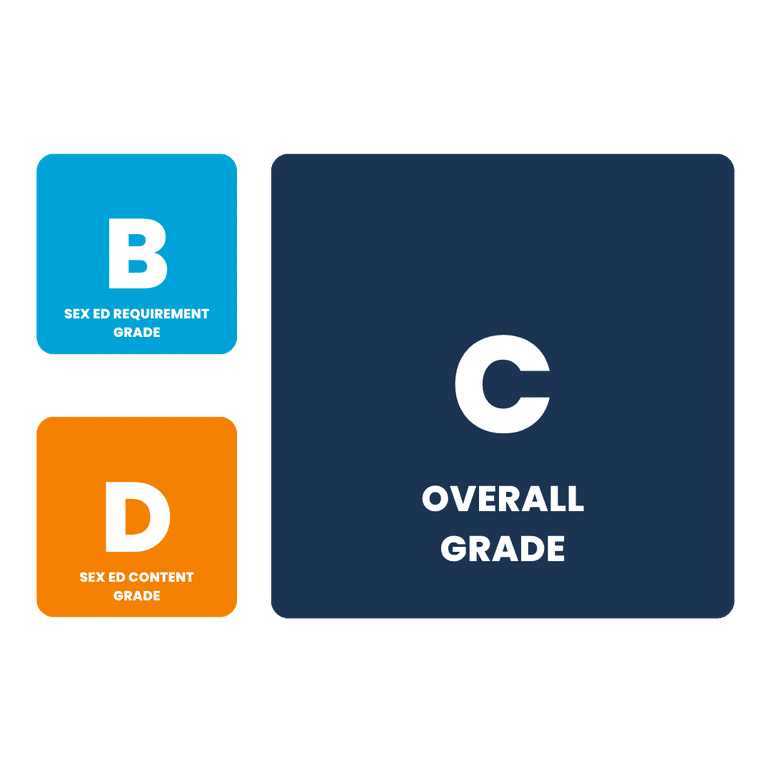
Current Requirement: Minnesota schools are required, by proxy, to teach sex education through state health standards they must follow.
- Curriculum must include instruction that helps students abstain from sexual activity until marriage, as well as cover HIV, HPV, and other STI’s.
- Minnesota has no regulation regarding medically accurate sex education. However, the curriculum must be “technically accurate.”
- Curriculum is not required to include instruction on sexual orientation or gender identity.
- Curriculum is not required to include instruction on consent.
- Parents or guardians may remove their children from instruction if they object to the content. This is called an “opt-out” policy.
Recent Legislation Shaping the State Landscape
Since the passage of House File 5237 in 2024, which required the Minnesota Commissioner of Education to develop and adopt statewide academic standards in health education through the formal rulemaking process, the state has had no other legislative movement to advance sex education. During the 2025–2026 legislative session, lawmakers introduced several measures that could have undermined progress toward comprehensive, evidence-based health education. House File 3550 sought to allow school districts to continue using locally developed health education standards rather than implementing statewide standards, potentially weakening the consistency and quality of health education across Minnesota. Meanwhile, HF 4154/Senate File 4166 attempted to require public health programs to promote “restorative reproductive medicine,” fertility awareness-based methods, and “body literacy” education, embedding a contested framework for understanding infertility and reproductive health into state programs.
At the same time, advocates continued pushing for meaningful improvements to Minnesota’s existing STI prevention requirements. SF 1309 attempted to update state law requiring medically accurate, comprehensive, and inclusive STI education, replacing outdated language centered on abstinence until marriage and ensuring programs provide students with information about additional methods of STI prevention. Although these efforts were unsuccessful, advocates remain committed to ensuring Minnesota’s young people have access to honest, inclusive, and medically accurate sex education.
Advocates in Action
Advocates should continue building support for statewide, comprehensive health education standards and oppose efforts to return full control to local districts. At the state level, advocates can urge legislators to protect the requirement for statewide health standards, support efforts like SF 1309 to strengthen medically accurate and inclusive STI education, and push back against policies that promote misinformation about sexual and reproductive health. At the local level, advocates can engage school boards and district leaders in conversations about adopting comprehensive, medically accurate, and inclusive health curricula while the state works toward finalized standards. Advocates can also use the Community Action Toolkit to strengthen local organizing efforts. For additional guidance, advocates can contact the SIECUS Policy team by emailing [email protected] or join the Sexuality Education Policy Action Council (SEPAC) using our interest form.
More on Sex Ed in Minnesota…
State Law: A Closer Look
Minnesota Statutes §121A.23 requires every school district to develop and implement a comprehensive risk-reduction program “including but not limited to human immunodeficiency virus [HIV] and human papillomavirus [HPV].” However, House File 5237 was passed in 2024 and contains provisions that, upon their approval, will require adherence to statewide health education standards and supersede locally developed standards.
Currently, each school district must use locally developed standards that have “a comprehensive, technically accurate, and updated curriculum that includes helping students to abstain from sexual activity until marriage” and must target “adolescents, especially those who may be at high risk of contracting sexually transmitted infections [STIs] and [sexually transmitted] diseases [STDs], for prevention efforts.” Statute 121A.23 also states that “if a district fails to develop and implement a program to prevent and reduce the risk of sexually transmitted infection and disease, the department must assist the service cooperative in the region serving that district to develop or implement the program.” Minnesota has 9 regional service cooperatives across the state that provide support services to school districts and other governmental units, including professional development, curriculum support, technology, and, in this case, educational programming to implement an STI prevention program for that school district.
Minnesota Statutes § 120B.20 requires each school district to: “Have a procedure for a parent, guardian, or an adult student (18 years of age or older) to review the content of the instructional materials to be provided to a minor child or to an adult student and, if the parent, guardian, or adult student objects to the content, to make reasonable arrangements with school personnel for alternative instruction.” This is called an “opt-out” policy.
State Standards
In 2024, Minnesota lawmakers directed the Minnesota Department of Education (MDE) to establish the state’s first statewide K–12 academic standards for health education, shifting health standards from local school district control to a consistent statewide framework. MDE began developing the standards in late 2024 through a committee that included educators, parents, school leaders, tribal representatives, postsecondary faculty, business representatives, and students. Following multiple rounds of public feedback and revisions, MDE released a commissioner-approved draft in December 2025 and formally entered the administrative rulemaking process. The proposed standards were reviewed through public comment and an April 2026 administrative hearing, with the record closing in May.
In June 2026, an administrative law judge disapproved the proposed standards, citing both procedural and substantive deficiencies. The Chief Administrative Law Judge upheld the disapproval in July, finding that MDE failed to provide required notice to several legislators and did not provide notice of the rescheduled hearing dates. The court stated that the proposed standards were “too vague to meet the law’s requirement” that statewide academic standards be clear, concise, objective, measurable, and grade-level appropriate. One important nuance from the court order: the court did not reject the proposed standards because it found the subject matter inappropriate or because of objections to comprehensive health education. The disapproval focused primarily on whether MDE followed the legally required rulemaking process and whether the proposed standards met the statutory requirements for enforceable academic standards. The court recommended that MDE withdraw the proposal and revise the standards, leaving Minnesota without finalized statewide health education standards while the next steps remain uncertain.
Until the statewide health education standards are formally adopted and implemented, school districts are to continue using their locally developed health education standards. While Minnesota’s National Health Education Standards and Minnesota Benchmarks guide local school district curriculum development, districts are not required to follow them, and locally developed standards vary widely. Additionally, the standards fail to mention contraception or condoms, and only briefly mention HIV transmission and unintended pregnancy.
Youth Sexual Health Data
Minnesota does not participate in the Youth Risk Behavior Survey (YRBS) because it has its own long-standing survey: the Minnesota Student Survey (MSS). To learn more about the Minnesota Student Survey and view reports, click here. The CDC’s School Health Profiles identify 22 sexual health education topics as critical for ensuring a young person’s sexual health. To view Minnesota’s results from the 2024 School Health Profiles Survey, visit CDC’s School Health Profiles Explorer tool. Visit the CDC’s School Health Profiles for additional information on school health policies and practices.
The quality of sex education taught often reflects funding available for sex education programs. To learn more about federal funding streams, click here.