


Massachusetts State of Sex Ed
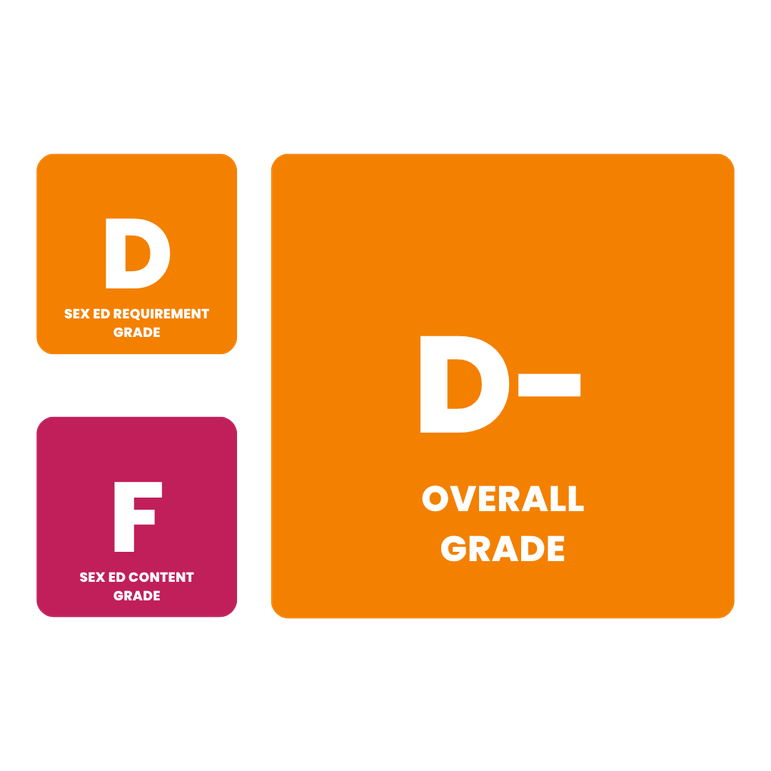
Current Requirement: Neither sex education nor HIV/STI education is required in Massachusetts.
- There is no policy on instructing on abstinence, contraception, or STI prevention.
- Massachusetts has no regulation regarding medically accurate sex education instruction.
- Curriculum is not required to include instruction on sexual orientation or gender identity.
- Curriculum is not required to include instruction on consent or healthy relationships.
- Parents and guardians can exempt their children from any portion of sex education instruction by providing written notice to the school principal. This is called an “opt-out” policy.
Recent Legislation Shaping the State Landscape
Advocates in Massachusetts have worked tirelessly to advance the Healthy Youth Act to address the lack of sex education policy in the Commonwealth. The Healthy Youth Act would ensure youth receive research-based, medically accurate, and culturally competent sex education in districts that require sex education. Broad public support for the bill is often met with pushback from anti-sex education lawmakers and conservative community groups. Although the Healthy Youth Act has passed the Senate in past legislative sessions, it has routinely been blocked from introduction in the House and has failed to pass the Massachusetts Legislature. In the 2025-2026 legislative session, Senator Sal DiDomenico led the introduction of the latest iteration of the Healthy Youth Act, Senate Bill 340/House Bill 646. Another bill, House Bill 5283 (formerly H547), would require school districts to align their curriculum with the Massachusetts Comprehensive Health Education Framework. As of September 2026, these bills remain active due to the Massachusetts full-time legislature.
In addition, advocates must remain vigilant against attacks by anti-sex opponents to restrict access to sex education, such as bills currently in the legislature like House Bill 550 (2025-2026) and House Bill 551 (2025-2026). Both of these bills aim to require prior parental consent for either sex education or instruction in sexual orientation and gender identity, constituting an opt-in policy. These bills add to the past year’s similar failed legislative attacks, including 5 bills to establish opt-in requirements for sex education in the 2023-2024 legislative session (H 461, H 462, H 463, H 509, H 587).
Advocates in Action
Advocates can take action to ensure young people in Massachusetts have access to quality sex education. After contacting local schools, advocates can determine whether schools teach sex education and whether the curriculum aligns with updated state standards.
Advocates can contact their representatives to discuss the need for strengthening the quality of sex education by endorsing the Healthy Youth Act. Advocates are encouraged to use the Community Action Toolkit to strengthen local organizing efforts. For additional guidance, advocates can contact the SIECUS Policy team by emailing [email protected] or join the Sexuality Education Policy Action Council (SEPAC) using our interest form.
More on Sex Ed in Massachusetts…
State Law: A Closer Look
Massachusetts does not require sex education; instead, it allows local school boards to make that decision. If a community decides to implement sex education, General Laws of Massachusetts, Chapter 71, § 38O requires that standards be developed with guidance from community stakeholders, including parents and at least one physician.
General Laws of Massachusetts, Chapter 71, Section 32A states that every district implementing or maintaining a curriculum that primarily involves human sexual education or human sexuality issues must adopt a policy ensuring parental/guardian notification. This policy must allow parents or guardians to exempt their children from any portion of the curriculum by providing written notice to the school principal.
State Standards
The Massachusetts Comprehensive Health Framework, updated in 2023, suggests that curricula include standards grouped under several topic areas, including healthy relationships and sexual health. These K-12 standards were developed using resources including the National Sexuality Education Standards. Some of the relevant standards include teaching sexual assault/abuse prevention, the harms of gender stereotypes, interpersonal communication strategies for healthy relationships, sexual orientation, gender identity, puberty, preventing sexually transmitted infections and pregnancy, and more. These standards, however, are recommendations and not required to be implemented by local school districts.
Youth Sexual Health Data
The CDC’s Youth Risk Behavior Survey (YRBS) tracks adolescent health behaviors, including sexual health behaviors. To learn more about Massachusetts’s 2023 YRBS results, click here. The CDC’s School Health Profiles measure school health policies, practices, and the sexual health topics taught in schools. To view Massachusetts’s results from the 2024 School Health Profiles Survey, visit CDC’s School Health Profiles Explorer tool. Visit the CDC’s School Health Profiles for additional information on school health policies and practices.
The quality of sex education taught often reflects funding available for sex education programs. To learn more about federal funding streams, click here.