


Maryland State of Sex Ed
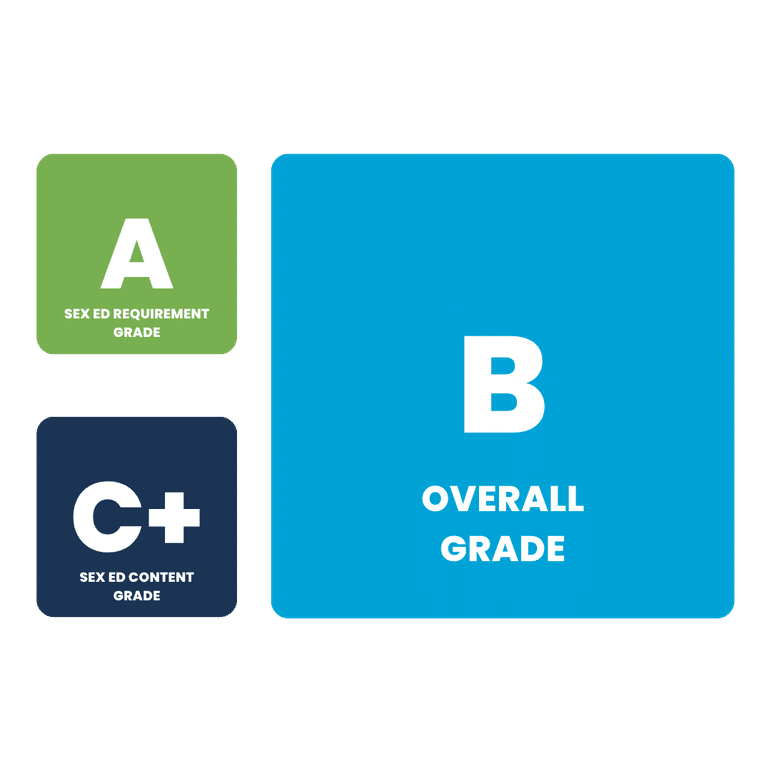
Current Requirement: Maryland requires sex education as part of mandated comprehensive health education.
- Curriculum must teach that abstinence is the best method for preventing unintended pregnancy and STIs.
- Instruction must be medically accurate.
- Instruction on contraception, STI prevention, consent and healthy relationships, and menstruation must be taught.
- Curriculum must include inclusive instruction on sexual orientation and gender identity.
- Curriculum must include instruction on consent and healthy relationships.
- Parents or guardians may remove their children from any or all “Family Life and Human Sexuality” classes. This is called an “opt-out” policy.
Recent Legislation Shaping the State Landscape
Advocates continue to work diligently to advance sex education in Maryland further. In the 2026 legislative session, lawmakers introduced House Bill 355/Senate Bill 254, which would have required instruction for grades 6-8 on the awareness and prevention of human and sex trafficking. These bills failed to pass, however.
For the last two years, Maryland lawmakers have introduced legislation to update state standards for comprehensive health education, make standards more inclusive, and improve enforcement of the Maryland Comprehensive Health Education Framework through bills such as House Bill 161 (2025), which did eventually pass, but not before oppositional lawmakers gutted the bill of all attempts to improve sex education, prevent opt-out of sexual orientation and gender identity instruction, and enforce the framework. A similar effort, House Bill 558, had failed in 2024.
Advocates in Action
Advocates can take action to ensure young people in Maryland have access to quality sex education. After contacting local schools, advocates can determine whether the curriculum aligns with state standards and what topics, if any, are currently missing from the sex education curriculum. Advocates can also push for state standards to model and align with the National Sex Education Standards and work within their community to prevent the spread of misinformation about inclusive sex education.
Advocates can contact their representatives to discuss the need for strengthening the quality of sex education by improving enforcement and adherence to Maryland’s Comprehensive Health Education Framework. Advocates are encouraged to use the Community Action Toolkit to strengthen local organizing efforts. For additional guidance, advocates can contact the SIECUS Policy team by emailing [email protected] or join the Sexuality Education Policy Action Council (SEPAC) using our interest form.
More on Sex Ed in Maryland…
State Law: A Closer Look
Maryland Code of Public General Laws §7–401 requires instruction in health education and the joint development of standards and guidelines for school health programs by the Departments of Education and Health and Mental Hygiene. The Administrative Regulation fulfilling this requirement, Md. Code Regs. 13A.04.18.01, mandates that each local school board work with its county health department to establish a broad school health education program, including “Family Life and Human Sexuality” and “Disease Prevention and Control” instruction, both of which encompass sex education topics, including human immunodeficiency virus (HIV)/acquired immunodeficiency syndrome (AIDS) education. The goals are to enable students to “demonstrate the ability to use human development knowledge, social skills, and health-enhancing strategies to promote positive relationships and healthy growth and development throughout the life cycle;” and to “demonstrate the ability to apply prevention and treatment knowledge, skills, and strategies to reduce susceptibility and manage disease.” This instruction must be provided starting prekindergarten through eighth grade and then offered in ninth through twelfth as needed to meet graduation requirements. Instruction on condoms and contraception must also be medically accurate.
In 2018, Maryland enacted Education Code § 7-445, requiring county boards of education to teach the meaning of consent, including respecting personal boundaries, in sex education classes.
Schools must allow parents or guardians to review all instructional materials before use, and parents or guardians may remove their children from any or all “Family Life and Human Sexuality” classes. This is called an “opt-out” policy.
State Standards
Curriculum development is guided by Maryland’s Comprehensive Health Education Framework, which is based on the National Health Education Standards. The framework includes family life and human sexuality in grades K-12. Sexual orientation, gender identity, contraception, HIV, and other sexually transmitted infections are all topics of instruction within this framework. The framework also requires instruction to be age-appropriate and taught by instructors who have been adequately trained in advance. According to the Maryland Administrative Code, schools must comply with state standards, or the Board of Education may recommend withholding state funding. Further, the Department of Education policy requires schools to align with the state curriculum framework. Compliance and enforcement of these policies remain an issue.
Youth Sexual Health Data
The CDC’s Youth Risk Behavior Survey (YRBS) tracks adolescent health behaviors, including sexual health behaviors. To learn more about Maryland’s 2023 YRBS results, click here. The CDC’s School Health Profiles measure school health policies, practices, and the sexual health topics taught in schools. To view Maryland’s results from the 2022 School Health Profiles Survey, visit CDC’s School Health Profiles Explorer tool. Visit the CDC’s School Health Profiles for additional information on school health policies and practices.
The quality of sex education taught often reflects funding available for sex education programs. To learn more about federal funding streams, click here.