


Illinois State of Sex Ed
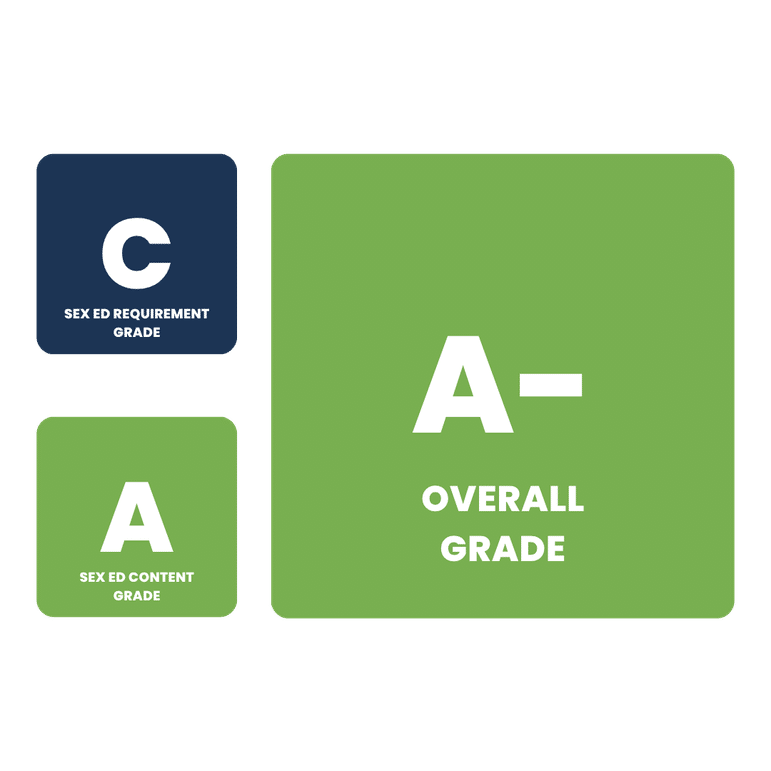
Current Requirement: Sex education is not required, but instruction on HIV/AIDS is required in Illinois.
- If schools choose to teach sex education, it must include instruction that is age- and developmentally appropriate, medically accurate, complete, culturally appropriate, inclusive, trauma-informed, evidence-based or evidence-informed, and aligned with the National Sex Education Standards.
- If sex education is taught, the curriculum is required to include instruction on sexual orientation or gender identity.
- If sex education is taught, the curriculum must include instruction on consent and healthy relationships.
- Parents or guardians may remove their children from any or all sex education, family life programs, and/or STD/human immunodeficiency virus (HIV) prevention programs. This is called an “opt-out” policy.
Recent Legislation Shaping the State Landscape
Advocates in Illinois continue to work to advance sex education policy in the state after the passage of the Healthy Youth Act. SIECUS did not observe sex education-specific legislation in the 2025-2026 legislative session.
In the 2023-2024 legislative session, to support implementation, lawmakers introduced numerous bills to provide grants to local school districts and community organizations to help them teach comprehensive sex education, such as Senate Bill 1428/House Bill 3067 and Senate Bill 3384. Although these bills ultimately failed, they underscore the need for funding to help Illinois schools comply with the sex education law.
While lawmakers continue to work to advance sex education, they also have had to defend against numerous failed legislative attacks on existing policy. In the 2023-2024 legislative session, House Bill 3168 sought to emphasize abstinence in sex education further and stigmatize LGBTQIA+ relationships by instructing on “honor and respect for monogamous heterosexual marriage”. Additionally, it would have required schools to teach “alternatives to abortion” to perpetuate abortion stigma. It ultimately failed to advance.
Advocates in Action
Advocates can take action to ensure young people in Illinois have access to comprehensive sex education. Advocates can also contact their local school board to determine whether sex education is being taught and ensure it aligns with the Healthy Youth Act. Advocates can contact their representatives to discuss the critical need for a statewide sex education mandate so that comprehensive sex education must be taught in all Illinois schools and for increased funding to support implementation. Advocates are encouraged to use the Community Action Toolkit to strengthen local organizing efforts. For additional guidance, advocates can contact the SIECUS Policy team by emailing [email protected] or join the Sexuality Education Policy Action Council (SEPAC) using our interest form.
More on Sex Ed in Illinois…
State Law: A Closer Look
The Illinois Critical Health Problems and Comprehensive Health Education Act (105 ILCS 110) states that the following topics must be addressed in all elementary and secondary schools:
[H]uman ecology and health, human growth and development; the emotional, psychological, physiological, hygienic, and social responsibilities of family life, including sexual abstinence until marriage; [and the] prevention and control of disease, including instruction in grades 6 through 12 on the prevention, transmission, and spread of [acquired immunodeficiency syndrome] AIDS.
This instruction is explicitly differentiated from sex education by the following Illinois Administrative Code Section 1.420 – Basic Standards:
“2) Nothing in this Section shall be construed as requiring or preventing the establishment of classes or courses in comprehensive sex education or family life education as authorized by Sections 27-9.1 and 27-9.2 of the School Code.”
In 2021, Senate Bill 818, enrolled as Public Act 102-0522, requires schools that offer sex education to teach comprehensive sex education that is age–, cultural-, and developmentally appropriate; medically accurate; complete; inclusive; trauma-informed; and replicates evidence-based or evidence-informed programs. Instruction must also align with the National Sex Education Standards. This is an “if/then” policy, meaning that IF sex education is taught in schools, then it must meet state-specified requirements by law. However, because it does not mandate sex education, local jurisdictions are still able to decide whether to provide sex education at all.
Parents or guardians may remove their children from any or all sex education, family life programs, and/or STD/human immunodeficiency virus (HIV) prevention programs. This is called an “opt-out” policy.
State Standards
Under Public Act 102-0522, the State Board of Education must develop sex education learning standards that align with the National Sex Education Standards. As of July 13th, 2022, the National Sex Education Standards are the new Illinois learning standards for sexual health education, and schools teaching sex education must use these standards to guide curriculum development.
Youth Sexual Health Data
The CDC’s Youth Risk Behavior Survey (YRBS) tracks adolescent health behaviors, including sexual health behaviors. To learn more about Illinois’ 2023 YRBS results, click here. The CDC’s School Health Profiles measure school health policies, practices, and the sexual health topics taught in schools. To view Illinois’s results from the 2024 School Health Profiles Survey, visit CDC’s School Health Profiles Explorer tool. Visit the CDC’s School Health Profiles for additional information on school health policies and practices.
The quality of sex education taught often reflects funding available for sex education programs. To learn more about federal funding streams, click here.