


Hawaii State of Sex Ed
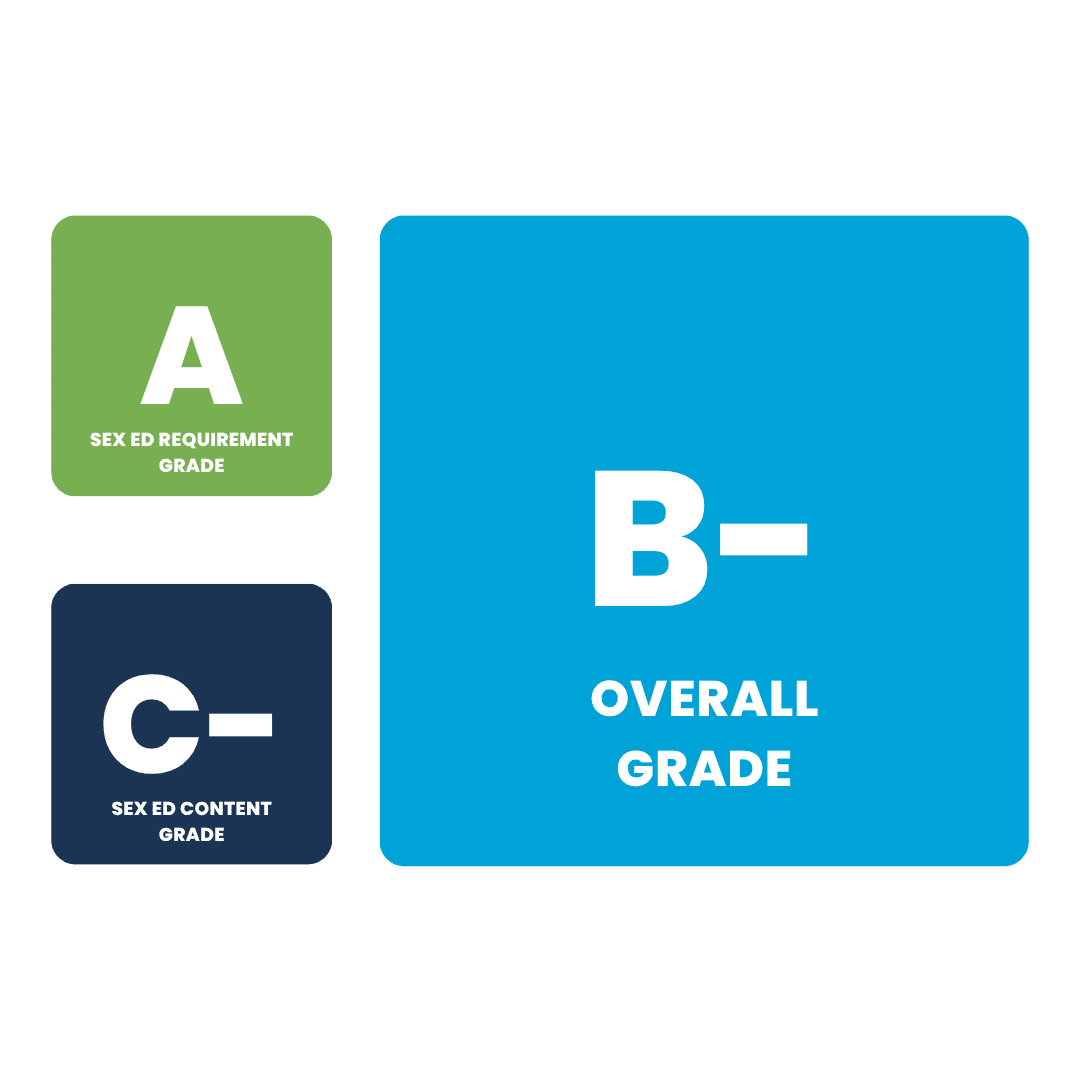
Current Requirement: Sex education is required under Hawaii’s Board of Education policy, which has the force of law.
- Curriculum must emphasize abstinence.
- Curriculum must instruct on HIV/STIs
- Curriculum must instruct on contraception
- Curriculum must be medically accurate and age-appropriate.
- Curriculum is not required to include instruction on sexual orientation or gender identity.
- Curriculum is not required to include instruction on consent. However, instruction must help students develop relationships and communication skills to form healthy relationships based on mutual respect and affection and free from violence, coercion, and intimidation.
- Parents and guardians can remove their children from sex education. This is called an “opt-out” policy.
Recent Legislation Shaping the State Landscape
Advocates continue to work to introduce progressive sex education legislation that would improve current implementation of sex education and make it more inclusive.
In the 2025-2026 legislative session, a package of four resolutions (HCR 118, HR 110, SCR 78, SR82) was passed and urged the Department of Education to strengthen menstrual health education initiatives and to adopt a comprehensive menstrual cycle curriculum in schools. In the 2023-2024 legislative session, three bills (HCR 222, HR 202, SCR 189) were introduced (and ultimately failed) to request a study of the implementation and standards of the Department of Education’s sexual health education policy. This legislation would have provided useful data and insight into how sex education is actually being taught in Hawaii’s schools. Another four bills (HB 1195, HB 288, SR 38, SCR 150) were introduced and would have required sex education incorporate instruction on healthy relationships, decision making, parent-child communication, required the Department of Education to develop training qualifications for sexuality health education teachers, required mandatory life skills curriculum discussing benefits and consequences of making decisions in financial matters and sexual relationships, requested the Department of Health to develop instruction on mental and emotional health, personal health and wellness, and sexual health and responsibility, respectively. Advocates continue to push for similar legislation in upcoming sessions.
Unfortunately, Hawaii has not been immune to attacks on sex education. In the 2025-2026 legislative session, Hawaii saw the introduction of a bill requiring instruction on fetal growth and development, also known as “Baby Olivia” bills, for the second year in a row in the Hawaii Legislature. While the bill has not yet made any progress, advocates must remain vigilant for legislative attacks like this that seek to undo the progress made on sex education in Hawaii.
Advocates in Action
Advocates can take action to ensure young people in Hawaii have access to comprehensive sex education. After contacting their local schools, advocates can determine what curriculum is being used and whether it complies with the Board of Education’s comprehensive sex education policy.
Advocates can contact their representatives to discuss the need for strengthening the quality of sex education by making it inclusive and evidence-based in Hawaii. Advocates can also discuss the critical need for the Department of Education to support schools in implementing the current sex education requirements. Advocates are encouraged to use the Community Action Toolkit to strengthen local organizing efforts. For additional guidance, advocates can contact the SIECUS Policy team by emailing [email protected] or join the Sexuality Education Policy Action Council (SEPAC) using our interest form.
More on Sex Ed in Hawaii…
State Law: A Closer Look
Hawaii has mandated sexual health education since 2015. The Hawaii State Constitution established the Hawaii State Board of Education, which can formulate and set statewide educational policy. On June 16, 2015, Hawaii’s Board of Education policy (103.5) was updated to read, “the Department of Education shall provide sexual health education to include age appropriate, medically accurate health education (further substantiated by HRS §321-11.1) that includes education on abstinence, contraception, and methods of infection prevention to prevent unintended pregnancy and sexually transmitted infection (STI), including human immunodeficiency virus (HIV).” It further encourages students to communicate with their parents and/or guardians about sexuality and stresses that abstinence “from sexual intercourse is the surest way to prevent unintended pregnancies, [STIs] such as HIV/[acquired immunodeficiency syndrome] (AIDS), and consequent emotional distress.” Additionally, it requires instructions on healthy relationships “that are based on mutual respect and affection and are free from violence, coercion, and intimidation”. Hawaii’s education policy 103-8 further states that birth control devices may be discussed during human reproduction studies. However, “the distribution of condoms and other prophylactic devices to students shall be prohibited in the classroom, on the school campus, or at any school-related activities.”
Hawaii does not require parental permission for students to participate in sexuality or HIV/AIDS education, but they may remove their children from the course. This is called an “opt-out” policy.
State Standards
Hawaii’s Content and Performance Standards for health education incorporate required sexual health education, and the standards inform schools about which content areas must be covered. However, the standards generally relate to health and do not specify which sexual health topics must be discussed beyond existing policy. Examples of healthy behavior outcomes (which should guide curriculum) include that the student should be able to “engage in behaviors that prevent or reduce unintended pregnancy” or “use appropriate health services to promote sexual and reproductive health”.
Youth Sexual Health Data
The CDC’s Youth Risk Behavior Survey (YRBS) tracks adolescent health behaviors, including sexual health behaviors. To learn more about Hawaii’s 2023 YRBS results, click here. The CDC’s School Health Profiles measure school health policies, practices, and the sexual health topics taught in schools. To view Hawaii’s results from the 2024 School Health Profiles Survey, visit CDC’s School Health Profiles Explorer tool. Visit the CDC’s School Health Profiles for additional information on school health policies and practices.
The quality of sex education taught often reflects funding available for sex education programs. To learn more about federal funding streams, click here.