


District of Columbia State of Sex Ed
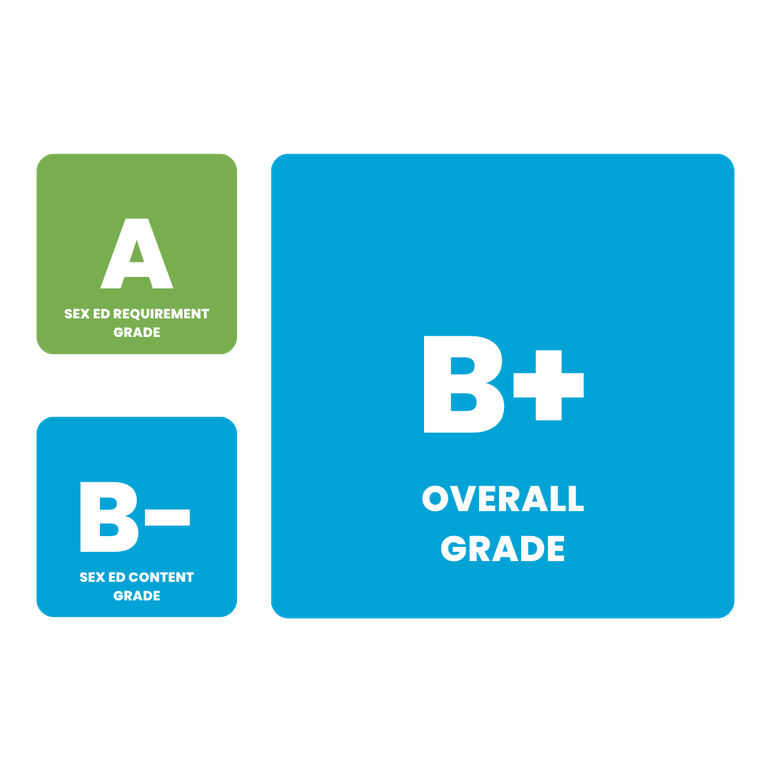
Current Requirement: District of Columbia schools must teach sex education.
- Sex education occurs within what is described as a required “comprehensive school health education” program. However, curriculum is not required to align with the National Sex Education Standards.
- Must be age-appropriate, but not required to be medically accurate.
- Curriculum must cover abstinence, not required to emphasize.
- Curriculum must include options on all pregnancy options, including abortion.
- The curriculum must cover healthy relationships education, including instruction on consent.
- Curriculum must include menstrual health education
- Curriculum must include robust instruction on sexual orientation and gender identity throughout human development.
- Parents can submit a written request to the principal to remove their children from sex education. This is called an “opt-out” policy.
Recent Legislation Shaping the State Landscape
The District of Columbia’s 2025-2026 legislative session convened January 2nd, 2025, and is expected to adjourn on December 31st, 2026. During this session, no relevant K-12 sexual health education legislation has been introduced. However, in 2024, DC made great legislative strides in recognizing young people as able to make their own decisions about sexual health care. Bill 25-0463, or the Minor Access to Medical Records and Appointments Amendment Act, passed and granted 16- and 17-year-olds full access to their medical records, including the ability to make appointments, attend, and seek reimbursement from insurance for services without parental consent. Additionally, Bill 25-0875 acknowledges the power of peer education in sexual health and allocated $150,000 in grants for DC non-profits to train, compensate, and supervise at least 50 high school students to work in public and public charter high schools as sexual health/student health educators.
Advocates in Action
While DC has covered much ground in ensuring the provision of quality sex education, the work for advocates is not finished yet. To improve DC’s sex ed content grade, more precise statutory language to require all sex education instruction to be medically accurate, evidence-based, and culturally responsive is needed.
Advocates can also contact state legislators to support a statewide comprehensive sex education mandate and use the Community Action Toolkit to strengthen local organizing efforts. For additional guidance, advocates can contact the SIECUS Policy team by emailing [email protected] or join the Sexuality Education Policy Action Council (SEPAC) using our interest form.
More on Sex Ed in the District of Columbia…
State Law: A Closer Look
District of Columbia Municipal Regulations §§ 5-E2304 and 5-E2305 state that public schools must provide comprehensive school health education, including instruction on human sexuality and reproduction. The instruction must be age-appropriate and taught in grades pre-kindergarten (pre-K)–12.
Since 2010, the DC Healthy Schools Act has increased time dedicated to health education, clarified sex education requirements, and authorized the Office of the State Superintendent of Education (OSSE) to conduct an annual survey of fifth-, eighth-, and tenth-graders on human sexuality, contraception, and drug use. The superintendent of the District of Columbia public schools must ensure that schools teach sex education and that students achieve a minimum proficiency in this area. Accordingly, the superintendent must provide systematic teacher training and staff development activities for health and physical education instructors.
Parents or guardians may submit a written request to the principal if they wish to remove their children from human sexuality and reproduction education classes. This is referred to as an “opt-out” policy.
State Standards
The District of Columbia provides Health Education Standards for students in grades K-12, and schools must follow these standards. “Safety Skills,” “Human Body and Personal Health,” and “Disease Prevention” are three of the six learning categories. STIs, HIV, unintended pregnancy, abstinence, and contraception are all discussed. In 2016, the state standards were updated to ensure students learn how to “differentiate between gender identity, gender expression, sexual orientation, and sex assigned at birth/biological sex,” as well as to understand that “as people grow and develop, they may begin to feel romantically and/or sexually attracted to people of a different gender and/or to people of the same gender.” In 2017, the Office of the State Superintendent of Education published the Sexual Health Curriculum Review to guide educators in providing sex education. In 2022, the Expanding Student Access to Period Products Act was passed, resulting in required learning standards for menstrual health education as of 2023. Students in grades 4, regardless of gender, learn the information needed “to manage menstruation with dignity, safety and comfort.”
Youth Sexual Health Data
The CDC’s Youth Risk Behavior Survey (YRBS) tracks six categories of health risk behaviors, including sexual health behaviors. To learn more about DC’s 2023 YRBS results, click here. The CDC’s School Health Profiles identifies 22 sexual health education topics as critical for ensuring a young person’s sexual health. To view DC’s results from the 2024 School Health Profiles Survey, visit CDC’s School Health Profiles Explorer tool. Visit the CDC’s School Health Profiles for additional information on school health policies and practices.
The quality of sex education taught often reflects funding available for sex education programs. To learn more about federal funding streams, click here.