


Colorado State of Sex Ed
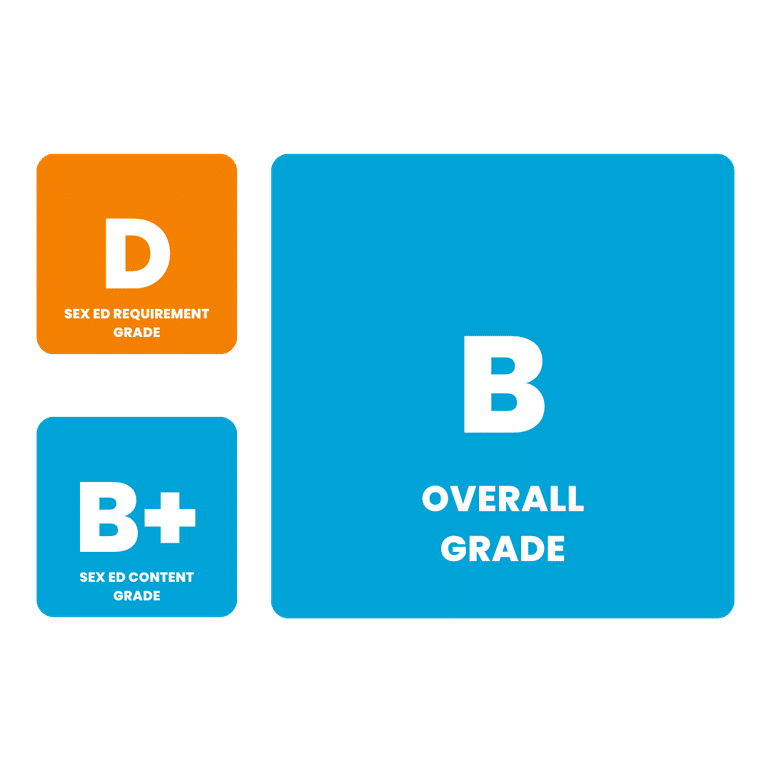
Current Requirement: Colorado schools are not required to teach sex education.
- If sex education is offered, the curriculum must be comprehensive as defined by law.
- If sex education is offered, the curriculum must be medically accurate, culturally responsive, and age-appropriate.
- If sex education is offered, curriculum must “not emphasize sexual abstinence as the primary or sole acceptable preventative method available to students.”
- If pregnancy options are taught, abortion must be included as an option for pregnancy.
- If sex education is offered, curriculum must include instruction on consent.
- If sex education is offered, curriculum must not exclude the health needs of lesbian, gay, bisexual, transgender, or intersex individuals.
- Parents or guardians can remove their children from sex education instruction with written notification. This is referred to as an “opt-out” policy.
Recent Legislation Shaping the State Landscape
Colorado’s most recent sex education legislation was passed in 2026, House Bill 26-1389. This bill eliminates the annual appropriation requirement for the comprehensive human sexuality education grant program. Despite an outpouring of advocates calling on the Colorado Governor to veto the bill, the Governor signed it into law, reducing a grant program established in 2013 to an unnecessary appropriation amid the state’s budget deficit. This change departs from Colorado’s longstanding commitment to supporting the mental, physical, and sexual health of young people and ensuring schools have the resources they need to provide comprehensive human sexuality education that aligns with state law.
Advocates in Action
With the elimination of $1 million in grants appropriated for comprehensive human sexuality education, advocates can play an important role in monitoring how local school districts are responding. Advocates can review their district’s health education policies and curricula, ask school and district leaders whether they offer comprehensive human sexuality education, and assess whether instruction aligns with Colorado statute §22-1-128. At the state level, advocates can contact their legislators and urge them to restore dedicated funding for the comprehensive human sexuality education grant program and support legislation establishing a statewide requirement for comprehensive sex education.
Advocates can also contact state legislators to support a statewide comprehensive sex education mandate and use the Community Action Toolkit to strengthen local organizing efforts. For additional guidance, advocates can contact the SIECUS Policy team by emailing [email protected] or join the Sexuality Education Policy Action Council (SEPAC) using our interest form.
More on Sex Ed in Colorado…
State Law: A Closer Look
Colorado state law does not require schools to provide sex or HIV instruction; however, it refers to “medically and scientifically accurate information” as a “right” of youth in Colorado statute §22-1-128. The statute mandates that all school districts that offer human sexuality instruction must provide comprehensive and medically accurate information. This is an “if/then” policy: if schools teach sex education, it must meet state-specified requirements. However, because it does not mandate sex education, local jurisdictions are still able to decide whether to provide sex education at all. In Colorado, curricula must include medically accurate, culturally sensitive information about methods to prevent unintended pregnancy and sexually transmitted infections (STIs), including HIV/AIDS. They must include information about abstinence, all FDA-approved forms of contraception, and be taught in a “cohesive, integrated, objective manner” so that youth are empowered to make decisions based on their “individual needs, beliefs, and values.”
Additional requirements state that if provided, the instruction must promote the development of healthy relationships through providing instruction on:
- How to communicate consent, recognize the withdrawal of consent, and understand the age of consent
- How to avoid making unwanted sexual advances or assuming a person’s supposed sexual intentions based on a person’s appearance or sexual history
- Age-appropriate information on “Safe Haven Laws” relating to the safe abandonment of newborn children
- All pregnancy outcomes, including abortion, if the school district opts to provide instruction on pregnancy outcome options
In addition, sex education instruction must not:
- Explicitly or implicitly teach or endorse religious ideology
- Use shame-based or stigmatizing language or instructional tools
- Emphasize abstinence as the primary or sole preventative method
- Rely on gender stereotypes
- Exclude the health needs of intersex individuals or LGBTQIA+ individuals
Parents or guardians must be notified if a sex education course is taught and allowed to review the curriculum. They may remove their children from sex education or STI/HIV education classes by sending written notice to the school. This is called an “opt-out” policy.
Under Colorado statute §22-25-104, the Colorado Department of Education provides guidelines on course length, included subjects, and how those subjects are addressed.
In 2013, the state legislature established a grant program for comprehensive human sex education, via Colorado statute §25-44-102. Schools that accept this funding must use curricula that are age-appropriate, culturally relevant, medically accurate, and science-based. In 2019, the state legislature amended the statute to ensure that the grant program’s oversight entity is made up of a diverse population of community members, prioritizes rural public schools and those not currently offering sex ed in the grant recipient selection process, and requires recipients to complete an annual report on the outcomes of their program. In 2026, House Bill 26-1389 passed and eliminated the annual appropriation requirement for the comprehensive human sexuality education grant program.
State Standards
The Department of Education provides curriculum development guidelines through the Colorado Academic Standards: Comprehensive Health Standards. Sexual health topics—including HIV and other STD transmission and prevention, unintended pregnancy, abstinence, and sexual assault—are components of these standards.
Youth Sexual Health Data
The CDC’s Youth Risk Behavior Survey (YRBS) tracks six categories of health risk behaviors, including sexual health behaviors. Colorado does not participate in the YRBS; however, it administers its own Healthy Kids Colorado Survey (HKCS). To learn more about Colorado’s 2025 HKCS results, click here. The CDC’s School Health Profiles identify 22 sexual health education topics as critical for ensuring a young person’s sexual health. Colorado has not participated in the School Health Profiles since 2014. Visit the CDC’s School Health Profiles for additional information on school health policies and practices.
The quality of sex education taught often reflects funding available for sex education programs. To learn more about federal funding streams, click here.