


California State of Sex Ed
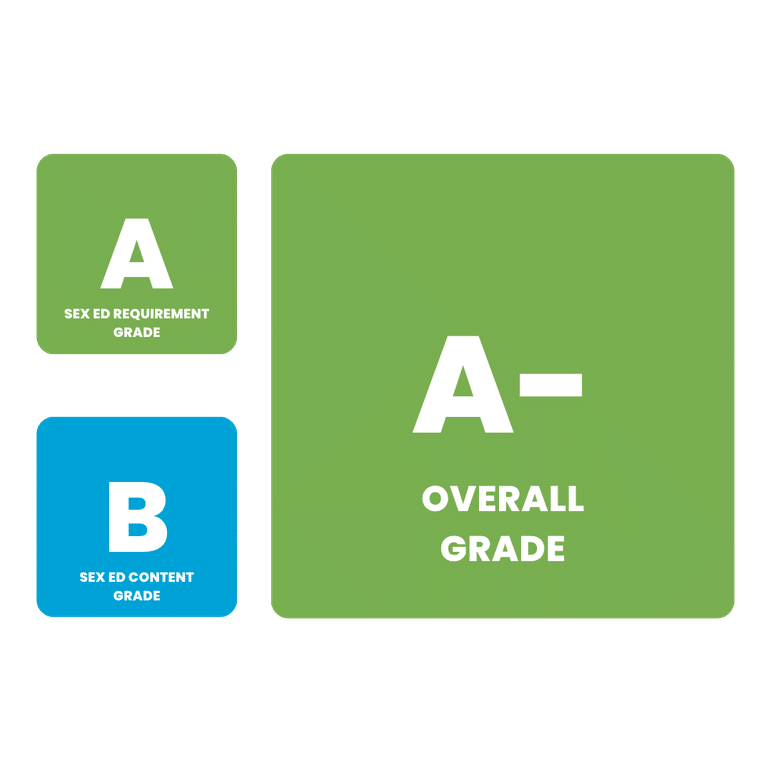
Current Requirement: The California Healthy Youth Act (CHYA) requires California schools to teach comprehensive sex education.
- Curriculum must include information on abstinence.
- Instruction must be medically accurate.
- Curriculum must be culturally competent for students of all sexual orientations and gender identities, include instruction on gender identity and expression, and when providing examples of relationships and couples, include examples of same-sex relationships.
- Curriculum is not required to include instruction on consent. However, curriculum must include instruction that provides students with “knowledge and skills they need to form healthy relationships that are based on mutual respect and affection, and are free from violence, coercion, and intimidation.” The updated Health Education Curriculum Framework also includes instruction on affirmative consent.
- Parents or guardians can remove their children from sex education instruction or STI/HIV education classes. This is called an “opt-out” policy.
Recent Legislation Shaping the State Landscape
While California remains one of the few states leading the country with a sex education mandate, there is still work to be done, and advocates are currently working to improve the quality of sex education through increased funding and expanded content requirements.
In the 2025-2026 legislative session, 4 progressive sex education bills were introduced; 3 passed and are awaiting the Governor’s signature. The first, Senate Bill 608, authorizes the California Department of Education to monitor compliance with the California Healthy Youth Act (CHYA) and improve accessibility to condoms in schools for grades 7-12. The other two, Assembly Bill 1792 and Assembly Bill 1766, strengthen instruction on assault and abuse prevention within sex education by requiring the Instructional Quality Commission to consider and recommend content on how to prevent human trafficking, exploitation, deepfakes, dating abuse, and digital violence as part of sex education during the next revision of standards. Unfortunately, Senate Bill 334, which would have required the Instructional Quality Commission to consider including information on Title IX and what a student should do if they suspect someone has experienced sexual abuse or assault as part of the next review of the Health Education Framework under CHYA, failed to advance past the second chamber. The 2023-2024 legislative session included several positive additions to required curriculum through the CHYA, including relationship and intimate partner violence resources (via Assembly Bill 2053), menstrual health education (via Assembly Bill 2229), and instruction on “sextortion” prevention through videos and online images (via Assembly Bill 2932); all of which passed.
Despite these successes, California has experienced some of the wave of coordinated state legislation attacking sex education and other inclusive programs in schools. During the 2025-2026 legislative session, Assembly Bill 281 was introduced and would have amended CHYA to allow parents to inspect instructional materials and then make copies. This would not only add administrative hurdles for teachers, administrators, and staff, but also add unnecessary bureaucracy to public education. Parental review of curriculum already exists under current CA law through the state’s opt-out policy, and these attempts to increase parental oversight reflect an ongoing trend of weaponizing parental rights to restrict public education. Assembly Bill 329 was also introduced and would have required “adoption” to be taught as part of sex education. While not inherently negative, requiring instruction on adoption within sex education is part of a recent trend to stigmatize abortion within sex education by platforming adoption as the only or “better” pregnancy outcome. Both of these bills died in committee.
Advocates in Action
Advocates can take action in their communities to protect access to sex education in California. They can contact their local board of education to determine whether it complies with the California Healthy Youth Act (CHYA) and what outstanding needs remain, such as teacher training or funding for instructional materials. Advocates can then emphasize the importance of policies that support implementing CHYA in all schools.
Advocates can also contact their representatives to discuss the critical need to protect the current statewide sex education mandate and continue to defend against regressive legislation. Advocates are encouraged to use the Community Action Toolkit to strengthen local organizing efforts. For additional guidance, advocates can contact the SIECUS Policy team by emailing [email protected] or join the Sexuality Education Policy Action Council (SEPAC) using our interest form.
More on Sex Ed in California…
State Law: A Closer Look
California Education Code § 51933-51934, known as the California Healthy Youth Act (CHYA), requires school districts to ensure that all students in grades 7–12 receive sex education and HIV/AIDS prevention education at least once in middle school and once in high school. It also mandates that the curricula be age-appropriate, medically accurate, objective, and “appropriate for use with pupils of all races, genders, sexual orientations, and ethnic and cultural backgrounds; pupils with disabilities; and English learners.” The law further requires instruction to teach students about gender, gender expression, gender identity, and gender stereotypes.
Schools may offer sex education before grade 7, in which case they must follow the same requirements. No program may “promote or teach religious doctrine”; instruction must encourage parent-child communication about sexuality, and instruction must “provide information about the effectiveness and safety of all Food and Drug Administration (FDA)-approved contraceptive methods in preventing pregnancy, including, but not limited to, emergency contraception.” Parents or guardians may remove their children from sex education and/or sexually transmitted infection (STI)/HIV education classes.
In 2018, California enacted three pieces of legislation that impact sex education. Ch. 428 allows school districts to provide an optional component of sex education instruction on the potential risks and consequences of creating and sharing sexually suggestive or explicit materials through cell phones and digital media. Ch. 807 requires the already-mandated information about human trafficking in sex education instruction to include further information on how social media and mobile devices are used for human trafficking. Ch. 495 extends California’s Healthy Youth Act to charter schools, requiring them to provide sexual health education in grades 7–12.
In 2024, several pieces of legislation were passed that added required topics to sex education implementation. Schools are now required to include resources for abusive relationships and intimate partner violence, such as hotlines, via the passage of Assembly Bill 2053. Assembly Bill 2932 also required schools to educate students on ways to prevent “sextortion,” or the use of sexual images or videos to threaten or coerce. Assembly Bill 2229 added required instruction on menstrual health education and related topics such as pain management, hygiene, and menstrual disorders.
State Standards
The Health Education Content Standards for California Public Schools: Kindergarten Through Grade Twelve and the Health Education Framework for California Public Schools: Kindergarten Through Grade Twelve guide human sexuality instruction curriculum. Sexual Health instruction must be included in grades 7–12, but, starting in grade 6, students must learn how to “object appropriately to teasing or bullying of peers that is based on personal characteristics, spiritual beliefs, gender, gender expression, and sexual orientation.” School districts, however, are not required to adopt these content standards.
Youth Sexual Health Data
The CDC’s Youth Risk Behavior Survey (YRBS) tracks adolescent health behaviors, including sexual health behaviors. Outside local school districts in San Bernardino, San Francisco, Los Angeles, San Diego, and Oakland, California no longer participates in YRBS data collection and instead administers its own state-based survey, the California Healthy Kids Survey. To view 2023-2025 results from the survey, click here. To learn more about 2023 YRBS data from San Francisco Unified School District, Los Angeles Unified School District, San Diego Unified School District, and Oakland Unified School District, visit the YRBS explorer tool. The CDC’s School Health Profiles measure school health policies, practices, and the sexual health topics taught in schools. To view California’s results from the 2024 School Health Profiles Survey, visit CDC’s School Health Profiles Explorer tool. Visit the CDC’s School Health Profiles for additional information on school health policies and practices.
The quality of sex education taught often reflects funding available for sex education programs. To learn more about federal funding streams, click here.