


Arkansas State of Sex Ed
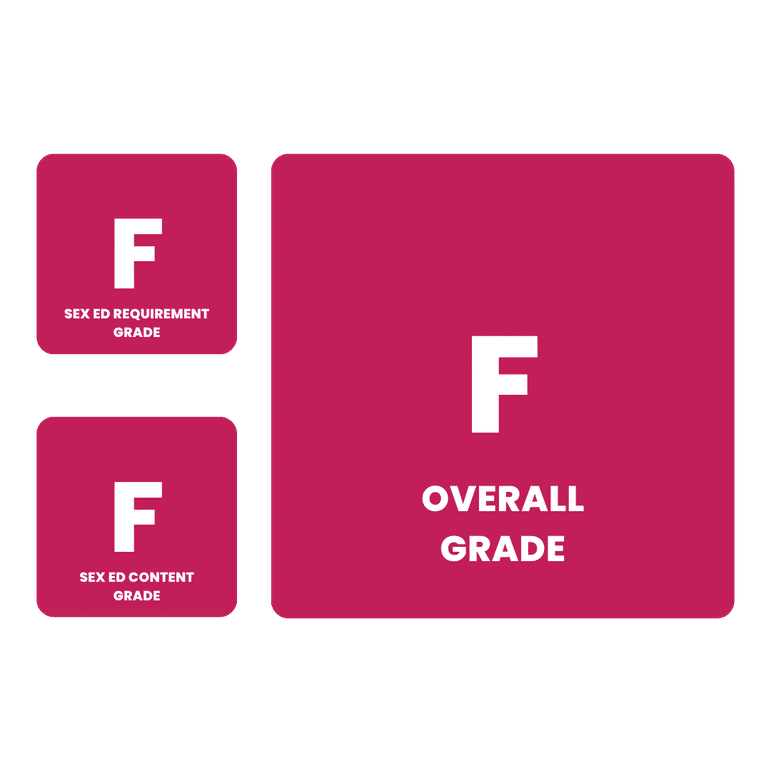
Current Requirement: Arkansas does not require sex education or HIV/STI education. However, students must receive annual dating violence awareness in grades 7-12 and complete 0.5 units of health and safety to graduate.
- If sex education is offered, the curriculum must stress abstinence.
- During the 2026 revision cycle, the Department of Education must incorporate discussion about human fetal growth and development into state physical and health education standards.
- Arkansas has no standard regarding medically accurate sex education instruction.
- Dating violence must be based on scientific research but lacks requirements for consent education.
- Parents or guardians must receive written notice of any sex education class and can remove their children from any part of the instruction. This is called an “opt-out” policy.
Recent Legislation Shaping the State Landscape
Arkansas’ 2026 legislative session was an abbreviated fiscal session that convened April 8th, 2026, and adjourned April 29th, 2026. While there was no sex education legislation introduced during this session, for years, Arkansas has been restructuring public education under the guise of “transparency” and “parental rights” despite advocates’ best efforts.
During the 2025 legislative session, the Public School Access and Transparency Act (SB 572) passed and expanded the definition of public records to allow public access to “learning materials” such as curricula, lesson plans, presentations, books, and more, including the right to make copies. These bills police vital content in school, especially information provided under sex education. Additionally, SB 332 also passed in 2025 and appropriated $4 million for personnel services, operating expenses, grants, and aid for Sexual Risk Avoidance Education (SRAE) programming by the Department of Education. Sexual Risk Avoidance Education funding promotes abstinence-only programs that withhold critical information about contraception and abortion, reinforcing anti-sex ed and anti-abortion agendas that undermine young people’s right to comprehensive, medically accurate health education.
Arkansas prides itself on being the “safest state in the nation for the unborn,” and recent legislation substantiates that claim. Beginning in 2021 with the enactment of the “Arkansas Student Protection Act,” House Bill 1592, which prohibited schools from partnering with entities that provide abortion care, effectively preventing Planned Parenthood sex educators from teaching in schools. Followed by SB 384 (2023), which required adoption awareness curriculum in health education, including teaching the “reasons adoption is preferable to abortion”. This is representative of a growing anti-abortion tactic targeting sex ed. According to the National Sex Education Standards, adoption should be taught as one possible pregnancy outcome (alongside parenting and abortion), and students deserve accurate, balanced information about all options. In 2025, Senate Bill 450 passed, requiring the Department of Education, during the 2026 Arkansas Academic Standards revision cycle, to include a discussion of human fetal growth and development. This will only increase misinformation about abortion and perpetuate abortion stigma in a state that already has a near-total abortion ban with no exceptions for rape or incest.
Advocates in Action
Advocates can contact state legislators to support a statewide comprehensive sex education mandate and use the Community Action Toolkit to strengthen local organizing efforts. For additional guidance, advocates can connect with the SIECUS Policy team by emailing [email protected] or consider joining the Sexuality Education Policy Action Council (SEPAC) using our interest form.
More on Sex Ed in Arkansas…
State Law: A Closer Look
In Arkansas, schools are not required to teach sex education, HIV education, or instruction on other sexually transmitted infections (STIs). However, if a school chooses to offer sex education or HIV/AIDS prevention programs, Arkansas Code § 6-18-703 mandates that abstinence must be stressed, as “it is the policy of the State of Arkansas to discourage … sexual activity by students.” Furthermore, every public school’s sex education and AIDS prevention education programs must “emphasize premarital abstinence as the only sure means of avoiding pregnancy and the sexual contraction of [AIDS] and other [STDs].”
To be accredited by the Arkansas Board of Education, public schools must offer health and safety education, and students must complete 0.5 units of health and safety to graduate from high school. In 2015, Arkansas Code § 6-16-1004 was amended to include dating violence awareness as a mandatory component of health and safety education for students in grades 7-12. Materials must be age-appropriate and grounded in scientific research. Local school boards may establish school-based health clinics, which may provide sex education. Such education must include instruction on abstinence. With written parental consent, these clinics may also prescribe and distribute contraceptives. However, state funds cannot be used to purchase condoms or contraceptives. Whether a school-based health clinic provides sex education or contraceptives is left to the discretion of the school board. Regardless, clinics cannot provide abortion referrals.
Under Arkansas Code § 6-16-1006, public schools must provide prior written notification to parents and legal guardians before offering instruction related to sex education, sexual orientation, or gender identity. Additionally, schools are required to establish a process allowing parents or guardians to inspect instructional materials and to submit a written request if they choose to exempt their child from such instruction- this is an opt-out policy.
In 2023, SB 294 was enacted into law as an amendment to Arkansas Code. § 6-16-157 and states the following:
“Before grade five (5), a public school teacher shall not provide classroom instruction on the following topics:
(1) Sexually explicit materials;
(2) Sexual reproduction;
(3) Sexual intercourse;
(4) Gender identity; or
(5) Sexual orientation.”
Additionally, in 2023, SB 384 was enacted into law as Arkansas Code. § 6-16-161, which mandates all public schools in the state to provide up to one hour of adoption awareness instruction each year to students in grades 6 through 12.
State Standards
Arkansas maintains curriculum standards for physical and health education, addressing STIs and HIV beginning in grade five. The curriculum standards stress the importance of abstinence, as well as the possible physical, emotional, and social consequences of sexual activity. Specific course content is left to the discretion of the local school districts. Additionally, the Department of Education’s Division of Elementary and Secondary Education has developed grade-level course content to help school districts meet the adoption awareness education requirement by providing one (1) hour of adoption awareness instruction to students enrolled in grades six through twelve (6–12). This instruction must take place at the beginning of the school year and may be conducted during a regular class period or at a special event organized for this purpose. The State Board of Education is responsible for developing the related curriculum, standards, materials, and instructional units. The content must cover a range of topics, including the benefits of adoption to society, types of adoption, the differences between adoption through the foster care system and private adoption, reasons adoption is considered preferable to abortion, available public and private adoption resources, statistical data on abortion, adoption, and childbirth, resources for pregnant students and parenting students, and an overview of child and human development.
Because SB 450 passed in 2025, Act 915 requires the Arkansas Department of Education to include a discussion of human fetal growth and development in physical and health education standards during the next revision cycle. Like other “Baby Olivia” type legislation, this will require a high-definition ultrasound showing vital organs in early fetal development and outlining the process of fertilization and every stage of development. Committee work to begin revising the physical and health education standards began in the summer of 2026 and will be fully implemented in 2028 – 2029.
Youth Sexual Health Data
The CDC’s Youth Risk Behavior Survey (YRBS) tracks six categories of health risk behaviors, including sexual health behaviors. To learn more about Arkansas’ 2021 YRBS results, click here. In 2023, Arkansas’ high school YRBS data was not weighted to represent all students, and the state did not participate in the middle school YRBS data collection. The CDC’s School Health Profiles measure school health policies, practices, and the sexual health topics taught in schools. Arkansas results were not representative for the 2024 School Health Profiles and thus were excluded from the CDC’s School Health Profiles Explorer tool.
The quality of sex education taught often reflects funding available for sex education programs. To learn more about federal funding streams, click here.