


Alabama State of Sex Ed
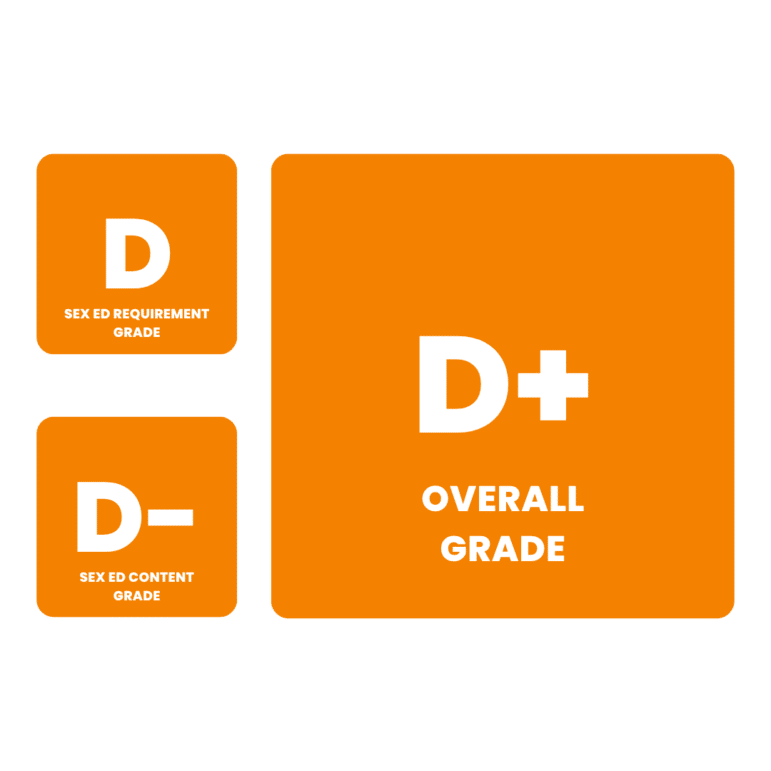
Current Requirement: Alabama students in grades 5-12 are required to receive instruction on HIV/AIDS through a health education program.
- If a school chooses to teach sex education, the curriculum must exclusively teach sexual risk avoidance and encourage abstinence from all sexual activity, following the 2026 passage of SB 209.
- Instruction on the “success sequence”, fetal development (i.e. “Baby Olivia”), and an emphasis on adoption instruction is required.
- Sex education is explicitly banned in grades K-4.
- If sex education is being taught, Alabama requires it to be medically accurate and developmentally appropriate.
- Alabama statute does not require that sex education include instruction on sexual orientation or gender identity.
- The law does not require teaching about consent.
- Parents or guardians can remove their children from sex education. This is called an “opt-out” policy.
Recent Legislation Shaping the State Landscape
During the 2026 session, SB 209 passed, requiring Alabama public schools to teach sexual risk avoidance as the exclusive approach to sex education. This legislation also mandates other harmful content for youth, such as success sequencing education, “medically sound” fetal development videos (i.e. Baby Olivia), and places emphasis on adoption instruction. Evidence-based sexual health information is restricted through prohibitions on contraceptive referrals, condom demonstrations, and information about abortion. Additionally, this bill prohibits sex education from being taught in kindergarten through fourth grade. Similar attempts to pass this legislation occurred in 2024 and 2025; with Alabama advocates narrowly defeating HB 195 and SB 277, which sought to require all sex education in public schools to emphasize “sexual risk avoidance”, or abstinence-until-marriage, and prohibit instruction on all pregnancy outcomes, including abortion.
Advocates in Action
With SB 209 now in effect, advocates play a critical role in addressing the gaps it creates by monitoring their local sex education content for misinformation being taught in schools, engaging local school boards to advocate for medically accurate, trauma-informed, and culturally responsive curricula, and organizing community-based comprehensive sex education opportunities outside the classroom.
Advocates can also contact state legislators to support a statewide comprehensive sex education mandate and use the Community Action Toolkit to strengthen local organizing efforts. For additional guidance, advocates can contact the SIECUS Policy team by emailing [email protected] or join the Sexuality Education Policy Action Council (SEPAC) using our interest form.
More on Sex Ed in Alabama…
State Law: A Closer Look
Alabama state law does not require the teaching of sex education. However, a resolution adopted by the Alabama State Board of Education in 1987 does require that students in grades 5–12 receive instruction about HIV/AIDS through a health education program. Should schools choose to offer additional sex education, Alabama State Code Section 16-40A-2 sets minimum requirements for what must be taught, but specific content is developed locally. In 2021, the passage of House Bill 385 amended statutory language. In 2022, House Bill 322 was enacted and now restricts classroom discussion on sexual orientation and gender identity, unless it is considered “age appropriate and developmentally appropriate in accordance with state standards” (AL Code § 16-40A-5). In 2026, Senate Bill 209 made major changes to content requirements, restrictions, and implementation. Among other things, the code requires “sexual risk avoidant” programs or curricula to include and emphasize that:
- Abstinence from all sexual activity is the only 100% effective way to prevent unwanted pregnancy, sexually transmitted diseases (STDs), and AIDS when transmitted sexually.
- Abstinence from all sexual activity outside of lawful marriage is the best health practice for unmarried school-age individuals .
- Advantages of avoiding nonmarital sexual activity and the potential physical and emotional negative outcomes associated with youth and teen sexual activity.
Alabama code also states that:
- Course materials and instruction that relate to sexual education or STDs should be age-appropriate and medically accurate, provided that no materials or instructions may introduce concepts related to sexual behavior to early elementary students in kindergarten through the fourth grade;
- Course materials and instruction that relate to sexual education or STDs should include:
- “An emphasis on sexual abstinence as the only completely reliable method of avoiding unintended teenage pregnancy and sexually transmitted diseases and infections.
- The emphasis shall be on the importance of delaying sexual activity by discouraging risky sexual behavior, providing skills to avoid sexual risk, and develop awareness among students of how sexual activity can impact the whole person, including physical, social, emotional, psychological, economic, and educational life outcomes
- Statistics and data based on the latest accurate medical information that indicate real life usage regarding the efficacy and limitations among the youth populations which, when used consistently and correctly in every single sexual encounter may reduce but not eliminate the risk of pregnancy or sexually transmitted infections, including HIV infections, provided the content: (i) is aligned with the exclusive message of sexual risk avoidance; (ii) does not encourage or promote sexual behavior among youth and teens; and (iii) is presented in the context that while contraception may reduce the risk of pregnancy and contracting sexually transmitted infections, including HIV, it does not eliminate the risk.
- The financial impact associated with pregnancy, childbirth, and child rearing
- Abortion including: (i) medically accurate information regarding the procedure; and (ii) abortion law in Alabama, which prohibits all forms of abortion excepted in limited medical circumstances
- The process of domestic infant adoption, including availability of relevant resources
- Information how to identify and avoid unhealthy relationships
- Knowledge and skills to resist unwanted peer pressure and avoid cyberbullying, sexting, pornography, and online sexual predators
- The impact of you and teenage pregnancy on the parent, child, and society
- The benefits of rearing children within the context of marriage, and the success sequence as provided by Section 16-40-14
- Medically sound information relating to fetal growth and development, maternal health, and infant health
- The code then prohibits any sex education or human reproductive curriculum from including any of the following information:
- Misrepresents the efficacy of contraception use, demonstrates the use of contraceptive materials, or explains how to obtain, or provides a referral for, contraceptives
- How to obtain, or that provides a referral to, abortion services
- Images, materials, or video footage that are sexually explicit
Additionally, the code states local boards of education may not use sex education teaching services from individuals or organizations who: “do not endorse sexual risk avoidance as the primary means of sex education” or “performs abortions, provides referrals to abortion services, or provides funding, advocacy, or other support for abortion”
Finally, the code states: “(d) Parents or guardians shall be given advanced, written notification of the teaching of any sex education or of the human reproductive process. Upon request and prior to distribution to students, the school shall make available to parents or guardians the sex education curriculum.” There is no requirement on parental consent prior to enrollment in sex education. This is referred to as an “opt-out” policy.
State Standards
In addition to statutory language, the 2019 Alabama Course of Study: Health Education provides the foundation for the minimum content requirements for topics such as HIV, STIs, and pregnancy prevention. The sexuality topics covered include: “societal expectations of remaining abstinent until married,” the “physical, social, and emotional effects,” of STIs, disease transmission, responsible decision-making, and refusal skills, among others. These standards have not been updated since the passage of House Bill 385 (2021) and thus do not reflect requirements such as being medically accurate, removing stigmatizing language about LGBTQIA+ relationships nor do they reflect the many new requirements from SB 209 (2026) such as the required sexual risk avoidance approach, fetal development, and success sequencing.
Youth Sexual Health Data
The CDC’s Youth Risk Behavior Survey (YRBS) tracks adolescent health behaviors, including sexual health behaviors, but Alabama no longer participates as of 2023. To learn more about Alabama’s 2021 YRBS results, click here. The CDC’s School Health Profiles measure school health policies, practices, and the sexual health topics taught in schools, but Alabama did not participate in the 2024 School Health Profiles. Visit the CDC’s School Health Profiles for additional information on school health policies and practices.
The quality of sex education taught often reflects funding available for sex education programs. To learn more about federal funding streams, click here.